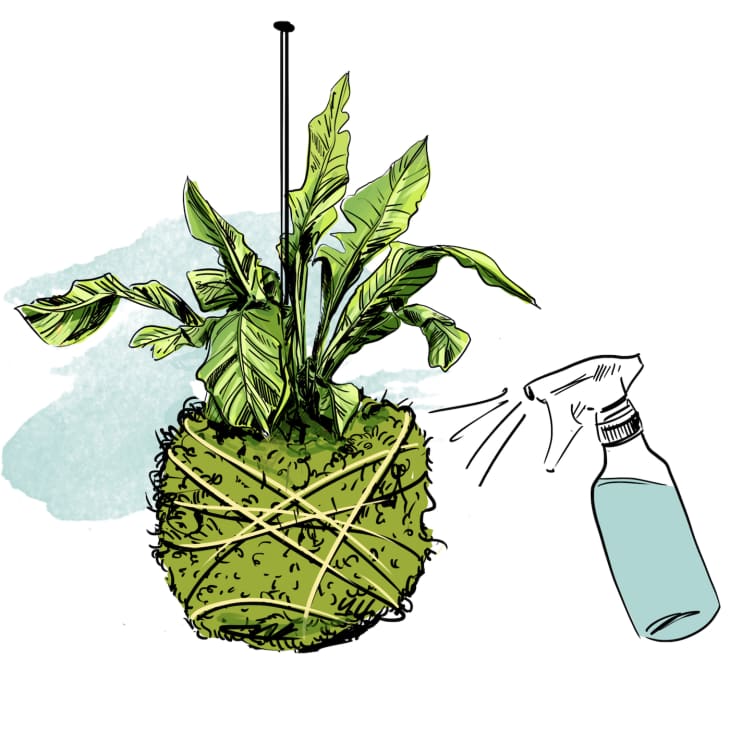
A Kokedama—a Japanese moss ball—let me introduce you to the ultimate small-space garden. Floating in midair, these plants don’t take up surface space, or even wall space. Plus, you don’t have to shell out money for a pretty container, as each plant is contained in its own moss-covered pod and is suspended from the ceiling using inexpensive twine. If you’re as convinced as we are that this is the gardening solution our tiny homes have been waiting for, follow these steps to make your own. Choosing a plant for your hanging string garden, pick one that doesn’t require full sun, because moss prefers a shady environment. A plant with a small roots system is also best. Here are some varieties that won’t mind hanging out in a shady spot.
- Many varieties of fern, including maidenhair ferns and bird’s nest ferns
- Staghorn ferns
- Jade
- Pothos
- Philodendron
- Begonias
- Succulents
- Spider plants
What You’ll Need
- A small plant (see our note on picking the right plants, below)
- Bonsai soil (like this stuff)
- Peat moss (like this from Home Depot)
- Clay (such as Bentonite clay, which works as a binding agent)
- Sheet moss (found at Home Depot)
- Twine
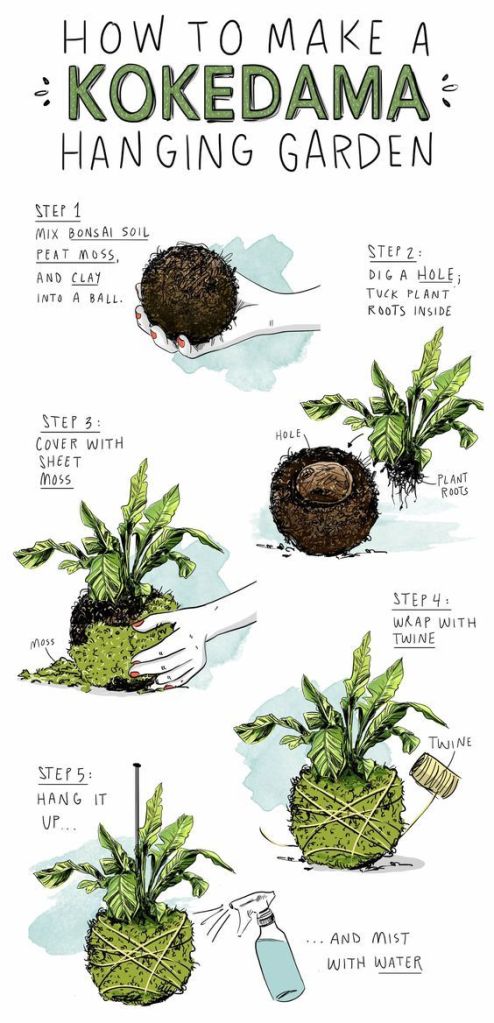
1. Mix the bonsai soil, peat moss and clay into a ball, following an approximate ratio of 70% bonsai soil and 30% peat moss-clay mixture. Moisten the mix with water so that all of the elements bind together. Creating a soil that won’t fall about, yet isn’t so dense that the plant roots can’t breathe is important for your kokedama to thrive.
2. Using your thumbs, dig out a small hole in the center of the soil ball. Brush any excess soil off the plant roots before tucking them into the hole and molding the soil around the roots.
3. Cover the ball with sheet moss, gently pressing sections of moss into the soil. Don’t worry if it doesn’t stick firmly in place at this point—wrapping with twine (step 4) will help.
4. Wrap the ball with twine, making sure to cover all sides, including the bottom, before securing with a knot. To hang up the kokedama, cut another long piece of twine and tie it onto both sides of the ball.
5. Hang up the Kokedama in a slightly shady spot and mist with water. When it’s time to water your plant, submerge the moss ball in a bucket of water, plant side-up, and allow it to soak up the water for 5 to 10 minutes. Then enjoy!
 The-Dirty-Hoe.com