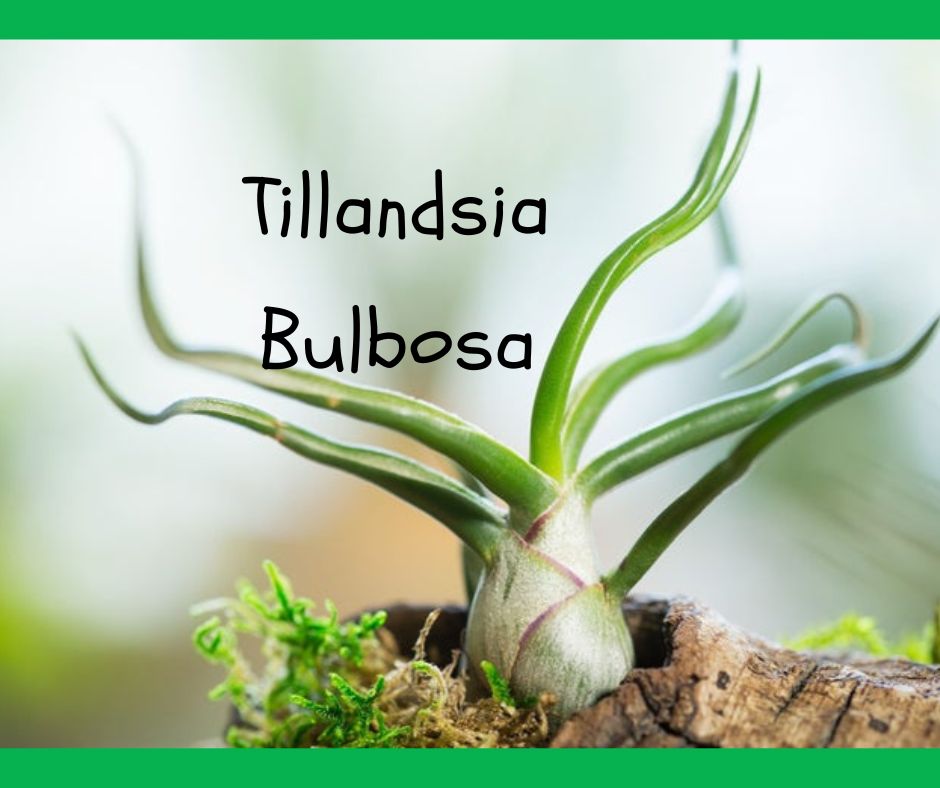
Imagine a plant that defies traditional notions of cultivation, a botanical wonder that thrives without soil, surviving solely on air and a touch of moisture. Tillandsia bulbosa, a remarkable epiphytic air plant that has captivated the hearts of plant enthusiasts worldwide. In this blog, we will delve into the intriguing world of Tillandsia bulbosa, uncovering its unique characteristics and providing insights into how to care for this extraordinary plant.
Unveiling Tillandsia Bulbosa
Tillandsia bulbosa, also known as the Bulbous Air Plant or the Bulbosa Air Plant, is a member of the Bromeliaceae family, which includes thousands of species of epiphytic plants. Native to parts of Central America, northern South America, and the Caribbean, Tillandsia bulbosa stands out for its distinctive appearance. Unlike conventional plants that rely on roots for anchorage and nutrient absorption, this air plant secures itself to tree branches, rocks, or other surfaces using its wiry roots, while its striking appearance adds a touch of mystique to any space.
Physical Characteristics
One of the most intriguing features of Tillandsia bulbosa is its bulbous base, from which its name is derived. This bulbous structure not only serves as a reservoir for water but also imparts a visually unique and aesthetically pleasing quality to the plant. The leaves of Tillandsia bulbosa are thin, green, and curl outwards, creating a mesmerizingly intricate form. Depending on the variety and conditions, the leaves can take on shades ranging from vibrant green to deep red or even purple.
Caring for Tillandsia Bulbosa
While Tillandsia bulbosa is relatively low-maintenance compared to traditional potted plants, it still requires some specific care to thrive and display its stunning beauty to the fullest. Here’s a comprehensive guide to help you provide the ideal conditions for your Tillandsia bulbosa:
1. Light: Place your Tillandsia bulbosa in bright, indirect sunlight. These plants thrive in natural light but should be protected from direct, intense sunlight, as it can cause the leaves to burn.
2. Water: Tillandsia bulbosa’s unique water storage capability allows it to survive without soil. Mist the plant with water using a spray bottle every 1-2 weeks, ensuring that water reaches the base of the leaves and the bulbous structure. If your environment is particularly dry, you might need to mist it more frequently. Avoid water stagnation in the leaf crevices, as this can lead to rot.
3. Air Circulation: True to their name, air plants require good air circulation. Ensure that your Tillandsia bulbosa is placed in a location where air can circulate freely around the plant. This helps prevent excess moisture buildup and maintains overall plant health.
4. Temperature: Tillandsia bulbosa prefers moderate temperatures, typically ranging from 50°F to 90°F (10°C to 32°C). Avoid exposing the plant to extreme cold or heat, as it can be detrimental to its health.
5. Fertilization: Feed your Tillandsia bulbosa once a month with a diluted, balanced, water-soluble fertilizer during the growing season (spring through early fall). Use a fertilizer specially formulated for air plants or bromeliads, and ensure that it doesn’t contain copper, as copper can be toxic to these plants.
6. Display: Get creative with your display options! You can place Tillandsia bulbosa in decorative containers, hang them in glass terrariums, or mount them on driftwood or rocks. Just make sure that your chosen display method allows for proper air circulation and drainage.
Tillandsia bulbosa stands as a testament to the diverse beauty of the plant kingdom. Its unique appearance, combined with its air-purifying properties and minimal care requirements, makes it a wonderful addition to any indoor space. By following the care guidelines outlined in this blog, you can enjoy the ethereal elegance of Tillandsia bulbosa and embark on an enchanting journey into the world of air plants.
 The-Dirty-Hoe.com