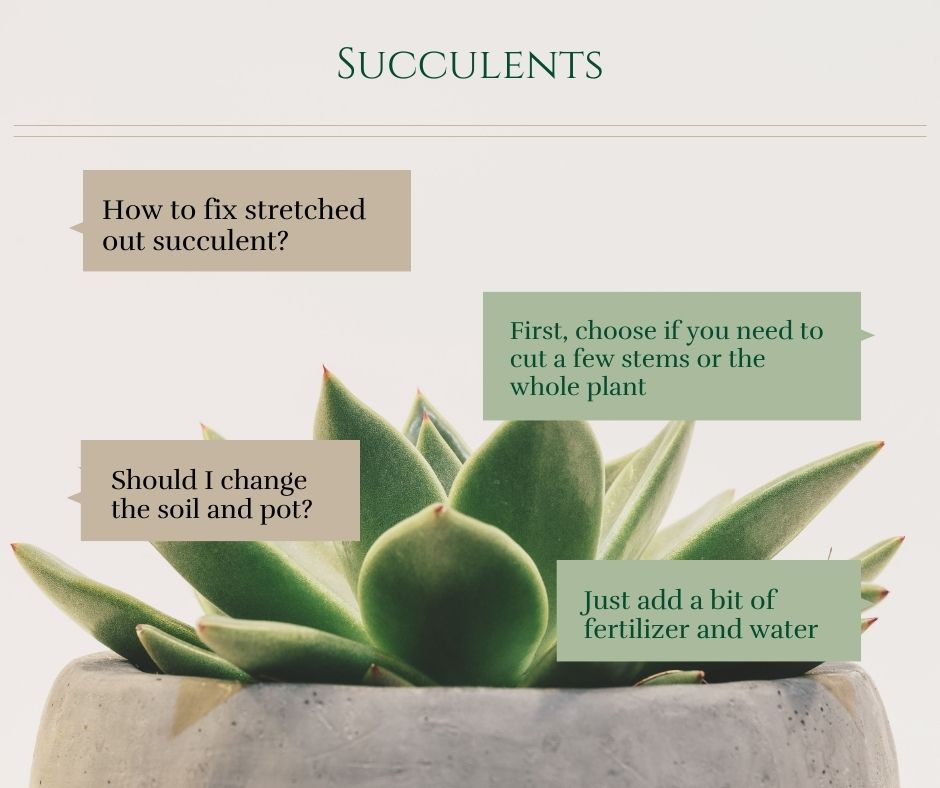
If your succulent has become stretched out or “etiolated,” it’s a sign that it’s not receiving enough light. Etiolation occurs when a succulent doesn’t get sufficient sunlight and starts to grow taller with larger gaps between its leaves. To fix this issue and help your succulent regain its compact and healthy form, follow these steps:
- Increase Sunlight Exposure: Succulents thrive in bright, indirect sunlight. Place your succulent in a location where it receives at least 6 hours of sunlight per day. If you’re growing it indoors, consider placing it near a south-facing window. If growing outdoors, choose a spot with adequate sunlight.
- Gradual Transition: If your succulent has been indoors for a while and is not used to direct sunlight, introduce it to direct sunlight gradually. Sudden exposure to intense sunlight can damage the leaves. Start by placing it in a spot with filtered sunlight, and over the course of a week or two, move it to a location with more direct sunlight.
- Prune and Propagate: If the stretched growth is too extensive, you might consider pruning your succulent to encourage new growth. Use clean, sharp scissors or pruning shears to carefully trim the elongated stems. After pruning, you can propagate the cuttings to grow new succulent plants. Allow the cuttings to dry and callus for a day or two, then plant them in well-draining soil.
- Replanting: If your succulent’s lower leaves are healthy, you can also try replanting it deeper in the soil. Gently remove the succulent from its pot and bury the lower stem deeper into the soil. This will encourage new growth from the base and help the plant become more compact.
- Proper Watering: Adjust your watering routine to match the increased light exposure. With more sunlight, the soil will dry out faster. Water your succulent thoroughly but allow the soil to dry out completely between waterings. Overwatering can lead to root rot, which further stresses the plant.
- Use Proper Soil: Make sure you’re using a well-draining succulent or cactus mix. This prevents water from accumulating around the roots and causing rot.
- Fertilize While proper nutrition is important, avoid over-fertilizing your succulent. Use a diluted, balanced liquid fertilizer during the active growing season (spring and summer) and reduce or stop fertilizing in the dormant season (fall and winter).
Remember that it might take some time for your succulent to recover and return to its compact form. Be patient and consistent in providing the right care, and your succulent should gradually improve.
 The-Dirty-Hoe.com