
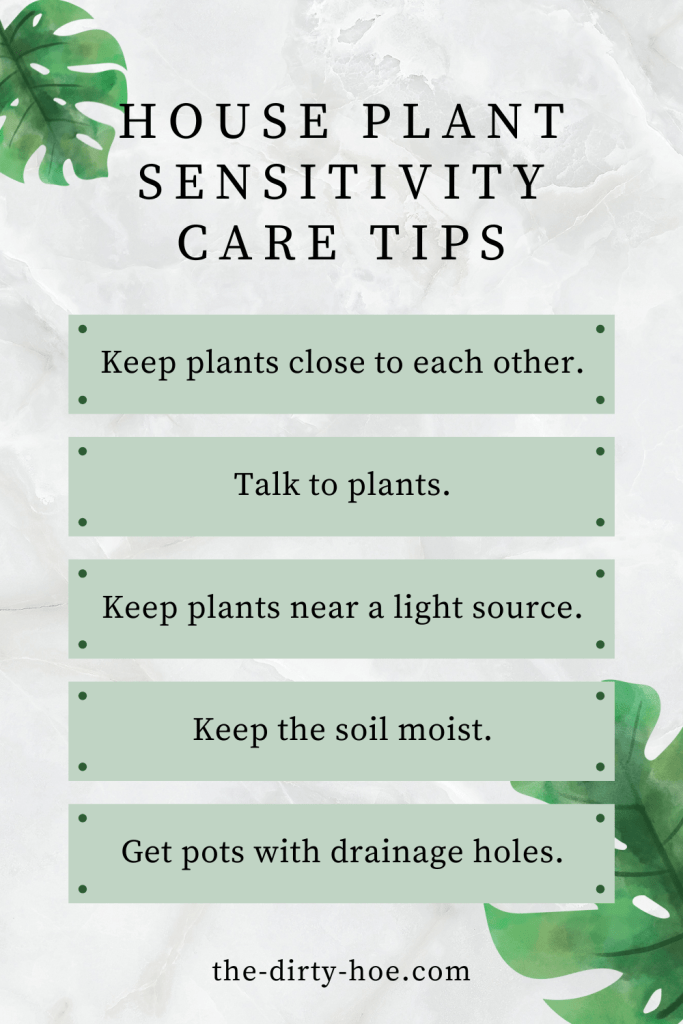
Houseplants have a unique way of bringing life and vibrancy into our homes. Not only do they purify the air and enhance our surroundings, but they also respond to the care and attention we provide. While plants don’t have feelings in the same way humans do, they do exhibit sensitivity to their environment. To keep your green companions thriving, consider these essential house plant sensitivity care tips: keeping plants near light sources, maintaining proper soil moisture, using planters with drainage, and even engaging in a little friendly chat with your leafy friends.
- Keep Plants Near Light Sources
Light is to plants what food is to humans. It’s essential for their growth and overall health. Different plants have varying light requirements, so it’s important to know your plant’s specific needs. Generally, plants can be categorized into three light groups:
a. Low Light Plants: These plants thrive in indirect or filtered light, making them suitable for rooms with limited natural light, like bedrooms or bathrooms. Examples include snake plants and pothos.
b. Medium Light Plants: These plants need moderate, indirect light and can tolerate some direct sunlight but should be protected from harsh midday rays. Spider plants and peace lilies fall into this category.
c. High Light Plants: These sun-loving plants crave bright, indirect sunlight. They are often placed near south or west-facing windows. Examples include succulents and cacti.
Understanding your plant’s light requirements and placing them accordingly ensures they receive the energy they need for photosynthesis, growth, and overall vitality.
- Keep Soil Moist
Proper watering is crucial for maintaining your houseplants’ sensitivity to their environment. Overwatering or underwatering can cause stress to your plants, leading to issues like root rot or dehydration.
To maintain optimal soil moisture:
a. Water According to Plant Needs: Different plants require different watering schedules. Some prefer to dry out between waterings, while others like consistently moist soil. Research your plant’s specific needs.
b. Use Well-Draining Soil: Ensure your plant is potted in well-draining soil to prevent waterlogged roots. A mix of potting soil and perlite or vermiculite often works well.
c. Check Moisture Levels: Stick your finger about an inch into the soil. If it feels dry at this depth, it’s time to water. If it’s still moist, wait a bit longer.
- Use Planters with Drainage Holes
Planters with drainage holes are essential for maintaining proper soil moisture and preventing waterlogged roots. When you water your plant, excess water can escape through these holes, ensuring that your plant’s roots don’t sit in standing water, which can lead to root rot.
If you have a decorative planter without drainage, consider using a plastic nursery pot with drainage inside the decorative pot. This allows you to water your plant thoroughly and then remove any excess water that collects in the outer pot.
- Talk to Your Plants
Believe it or not, talking to your plants can have a positive effect on their growth. While plants don’t have ears or brains to process words, the vibrations from your voice can create a gentle, nurturing environment. It also encourages you to spend more time with your plants, allowing you to notice any changes or issues sooner.
Talking to your plants can be a calming and mindful practice, fostering a deeper connection between you and your leafy companions.
In conclusion caring for houseplants is not just about providing them with basic needs; it’s also about understanding their sensitivity to their environment and responding accordingly. By keeping your plants near suitable light sources, maintaining proper soil moisture, using planters with drainage, and even engaging in a little conversation, you can ensure that your green companions thrive and bring beauty and vitality to your home for years to come. So go ahead, shower them with love and attention, and watch them flourish!
 The-Dirty-Hoe.com