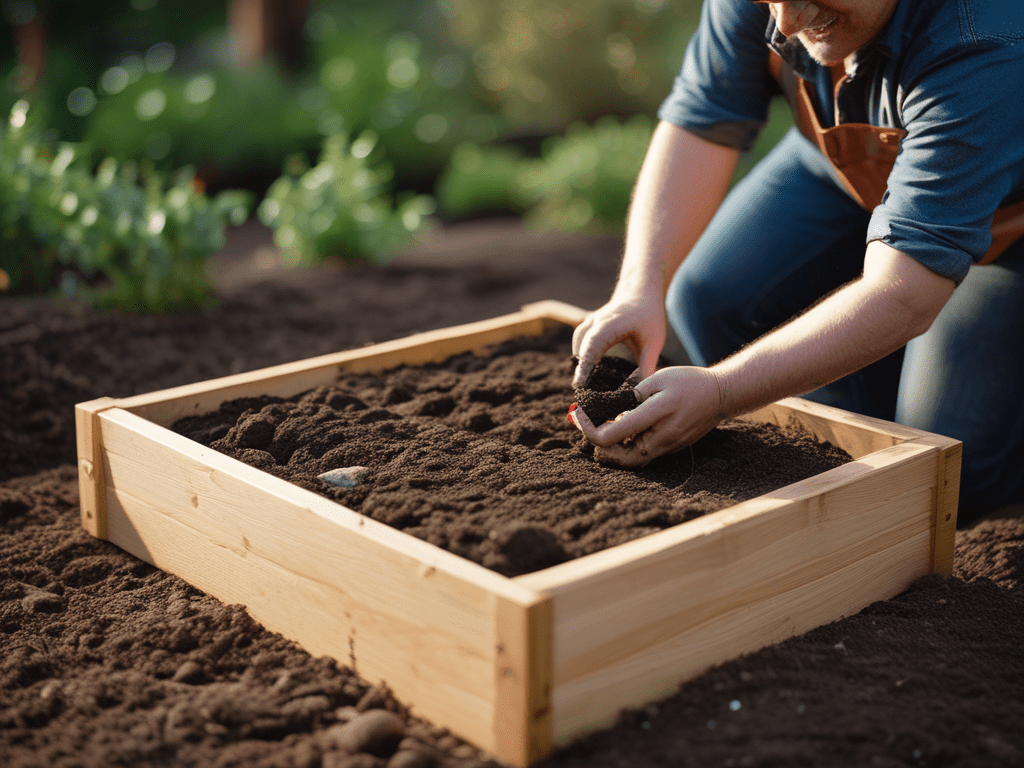
Soil is one of the most critical elements to get right when you’re growing your own herbs, fruits, and vegetables. The raised bed and trellis provide a strong foundation for your garden, but it’s the soil (and the water and the sunlight) that will fill your space with life. Good soil is the difference between having a bunch of boxes and having sprouts, plants, and of course, delicious fresh harvests. If I hear someone saying their plants aren’t doing well (their leaves are changing color or the plants just aren’t growing or they’re having major pest issues), my first question is: “Have you checked your soil?”
Most of the plants that you’ll want to grow in your raised beds are annuals that finish their life cycles in 30 to 90 days. It’s often best to start annuals from seed, but these plants can have a difficult time sprouting in certain types of soil because they don’t have strong enough root systems to push through.
Peas, carrots, radishes, tomatoes, peppers, squash, eggplants, tomatillos, beets, cabbage, kale—these all have a fairly fragile root system. Their tender roots are not meant to push deep into the earth like those of an oak tree. Because of this, the roots for edible plants require a unique kind of soil, not the kind of soil that you’re going to find in your landscape.
Make Your Own Garden Soil for Your Raised Beds
Potting soil can be a great base for raised bed soil, it can still be lacking in key nutrients and structure – often actually being too light if it is used exclusively as the soil for raised beds. Of course, another big drawback for potting soil is its cost. It can certainly get quite expensive to fill large raised beds entirely with bags of potting soil.
So what is the solution? How can you make the best raised bed soil around without breaking the bank?
4 Must Add Ingredients To Create Great Raised Bed Soil
First: Top Soil / Garden Soil
Whether you are using existing soil from your garden, or purchasing top soil, it’s important to use a base soil that is loose and free of heavy clumps. The soil in raised beds needs to be heavier than pure potting soil, but not so heavy that plant’s roots can’t grow in it.
If using soil from your garden, it’s a great idea to till it prior to adding to help break it up into a finer consistency. And if purchasing soil, it’s best to look for pulverized topsoil. This is soil that has been run through a screen to be loose and friable.
You can find topsoil in bags or in bulk – but however you purchase it, the important part is to be sure it is loose and breaks apart easily. Raised beds should consist of about 75% (topsoil or garden) soil.
Next, it’s time to lighten up and energize your raised bed soil. And to do that, it all starts by adding in compost! Without a doubt, compost is the number one must-use ingredient to add to raised bed soil. Compost truly has it all. It’s lightweight, full of nutrients, and also contains all kinds of helpful bacteria and organisms that bring soil to life.When it comes to how much compost is enough when adding to raised beds, a good rule of thumb is to get your soil’s overall make-up to consist of around 20% compost.
Thirdly , probably one of the most overlooked and under-used of all natural ingredients, perlite can be a huge difference maker for helping the soil in raised beds and containers.Perlite is incredible for lightening the overall structure of soil. Weighing less than a pound for cubic foot, those tiny pebbles help to lighten heavy soil in an instant. They also keep the soil around it from compacting together. That, in turn, is great for allowing water, oxygen and nutrients to flow more easily to the roots of plants.
A good rule of thumb for adding perlite to your raised beds is to mix in 1 cup of perlite for every square foot of raised bed space. And here is some good news, even though it is natural and organic, it doesn’t break down – so you wont have to keep replacing it!
Lastly, coffee grounds and ground up egg shells is what I like to add to the raised beds. Coffee grounds are a great source of low and slow source of nitrogen for plants. They also help to absorb and hold moisture and add humus and structure to the soil. Egg shells, on the other hand, are a great source of calcium and other trace elements that can help rebuild tired soil.
But don’t just crumble up your egg shells and toss them in the dirt! When adding egg shells, it’s always best to first grind them into a powder. Even small egg shell pieces can take a long time to break down. But by pulverizing them first, you speed up the process to help quickly release the power of the shell into the soil.
The ideal garden soil blend will be dark in color and have some moisture in it. It won’t fall apart in your hand the minute you pick it up; it’ll hold together in some shape or form but still have a bit of looseness. Instead of letting water run right through, the ideal soil will hold water just long enough for the plants to take it up. You can follow more tips along in our previous blogs!
 The-Dirty-Hoe.com