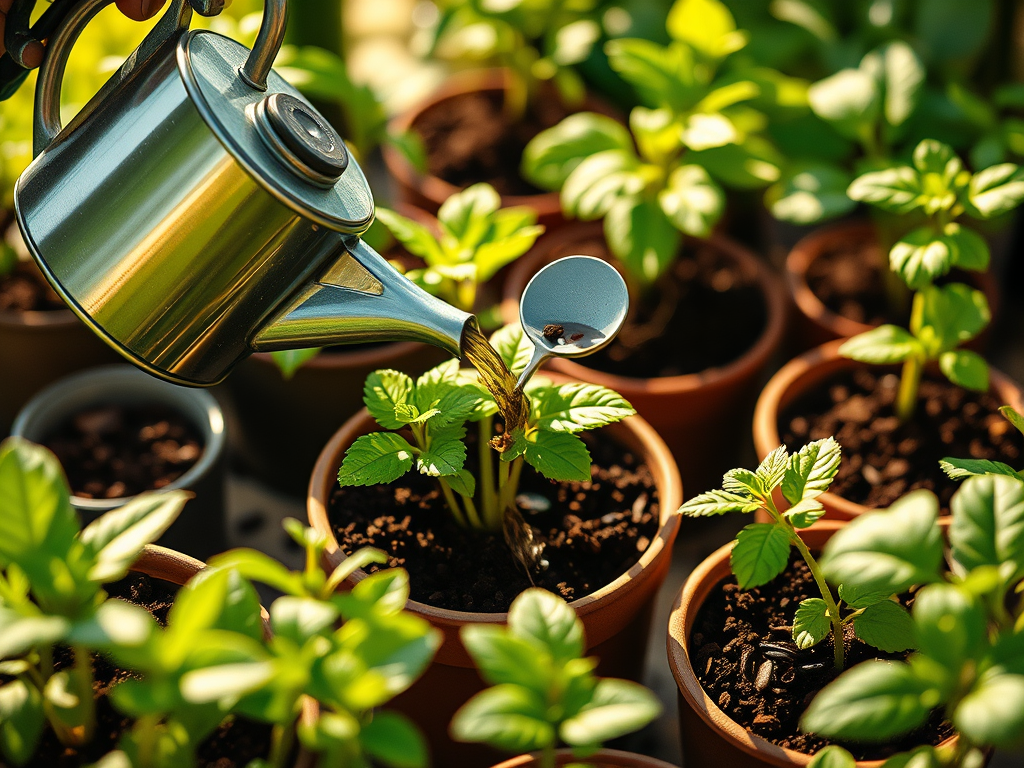
One popular plant hack that often doesn’t work as well as advertised is watering plants with leftover coffee. While coffee is acidic and could theoretically benefit acid-loving plants like azaleas or ferns, the reality is that the caffeine in coffee can be harmful to many plants. Additionally, the acidity of brewed coffee is often too high, which can alter the soil’s pH and damage the plant’s roots.
A better approach would be to compost coffee grounds, which can provide a slow-release of nutrients when mixed with soil.
Instead, a great way to water plants and provide them with nutrients is by using compost tea. This is a nutrient-rich solution made by steeping compost in water. Here’s why it works well:
- Nutrient Boost: Compost tea contains essential nutrients like nitrogen, phosphorus, and potassium that promote plant growth.
- Beneficial Microbes: It introduces beneficial microorganisms to the soil, which improve plant health and resilience.
- Easy Absorption: The nutrients in compost tea are in liquid form, so they can be quickly absorbed by the plant’s roots and leaves when used as a foliar spray.
To make compost tea:
- Fill a bucket with water and submerge a small amount of compost in a mesh bag or old sock.
- Let it steep for 24-48 hours, stirring occasionally.
- Strain and dilute the mixture (1:10 ratio with water) before applying it to your plants.
Another great option is fish emulsion, a liquid fertilizer derived from fish waste that is high in nitrogen and other nutrients. It’s effective for promoting leafy growth in plants.
 The-Dirty-Hoe.com