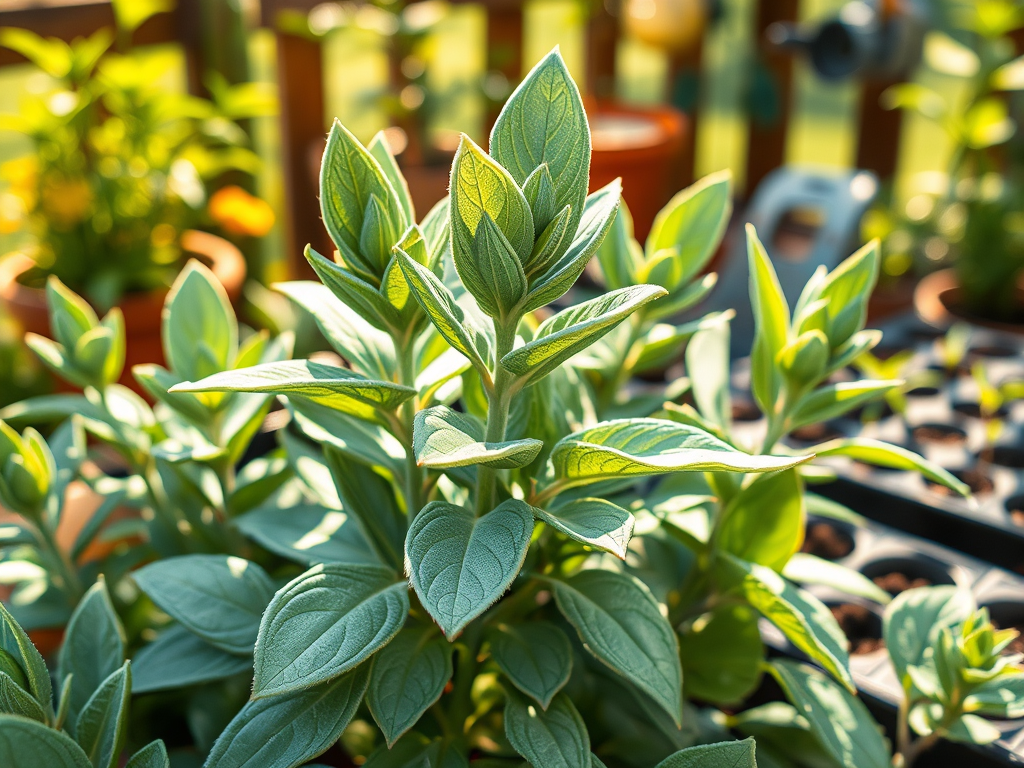
If you’re dipping your toes into herb gardening, sage is one of the best herbs to start with. This beautiful, aromatic plant not only adds savory flavor to your dishes, but it also brings soft green-grey texture to your garden or containers. Whether you’re planting in the ground or in a pot on your porch, sage is a hardy herb that’s beginner-friendly and low-maintenance.
Let’s walk through everything you need to know—from seed to harvest!
🌱 How to Plant Sage Seeds
- When to Start:
Start sage seeds indoors 6 to 8 weeks before your last expected frost. If you’re in a warm climate, you can also direct sow seeds outdoors after the danger of frost has passed. - Supplies You’ll Need:
- Seed starting tray or small pots
- Seed-starting mix (light and well-draining)
- Sage seeds
- Spray bottle or gentle watering can
- Planting Steps:
- Fill your tray or pots with seed-starting mix.
- Place 2–3 sage seeds in each cell or pot, pressing them gently into the soil—about ¼ inch deep.
- Mist with water to moisten the soil without washing the seeds away.
- Cover lightly with plastic wrap or a humidity dome to help germination.
- Place the tray in a warm spot with plenty of indirect sunlight (or under grow lights).
- Germination Time:
Sage seeds can take 10–21 days to sprout, so be patient and keep the soil moist but not soggy.
🌿 Transplanting and Sage Plant Care
Once your seedlings are 2–3 inches tall and have a few sets of true leaves, they’re ready to move outdoors.
- Choosing the Right Spot:
- Sage loves full sun, so choose a sunny area in your garden or a bright spot on your patio.
- It prefers well-drained soil—consider raised beds or containers with good drainage.
- Transplanting Tips:
- Space your sage plants about 18–24 inches apart.
- Water well after transplanting to help the roots settle in.
- Watering & Care:
- Sage doesn’t like wet feet! Water when the top inch of soil feels dry.
- Once established, sage is drought-tolerant and doesn’t need much babying.
- Trim leggy stems to encourage bushier growth.
- Fertilizer:
Sage doesn’t need much fertilizer. In fact, too much can reduce its flavor. A compost-rich soil will usually do the trick. - Pests & Problems:
Sage is pretty pest-resistant, but keep an eye out for aphids or spider mites. A gentle spray of water or insecticidal soap can help if needed.
✂️ How to Harvest Sage
You can begin harvesting sage once your plant is well-established and about 6–8 inches tall.
- Best Time to Harvest:
Morning, after the dew dries but before the sun gets too hot, is the best time to harvest for maximum flavor. - How to Cut:
- Snip a few leaves or cut stems just above a leaf node (where new leaves are growing).
- Always leave at least two-thirds of the plant to keep it healthy.
- Drying & Storing:
- Tie stems together and hang them upside down in a cool, dry spot with good air circulation.
- Once dry, crumble the leaves and store them in an airtight jar away from sunlight.
Have you grown sage before, or are you just getting started? Let us know in the comments below and share your favorite way to use fresh sage in the kitchen!
Happy gardening!
 The-Dirty-Hoe.com
I love sage! Used it tonight straight from the garden, in with the sausages and pasta dish I was making!
LikeLike