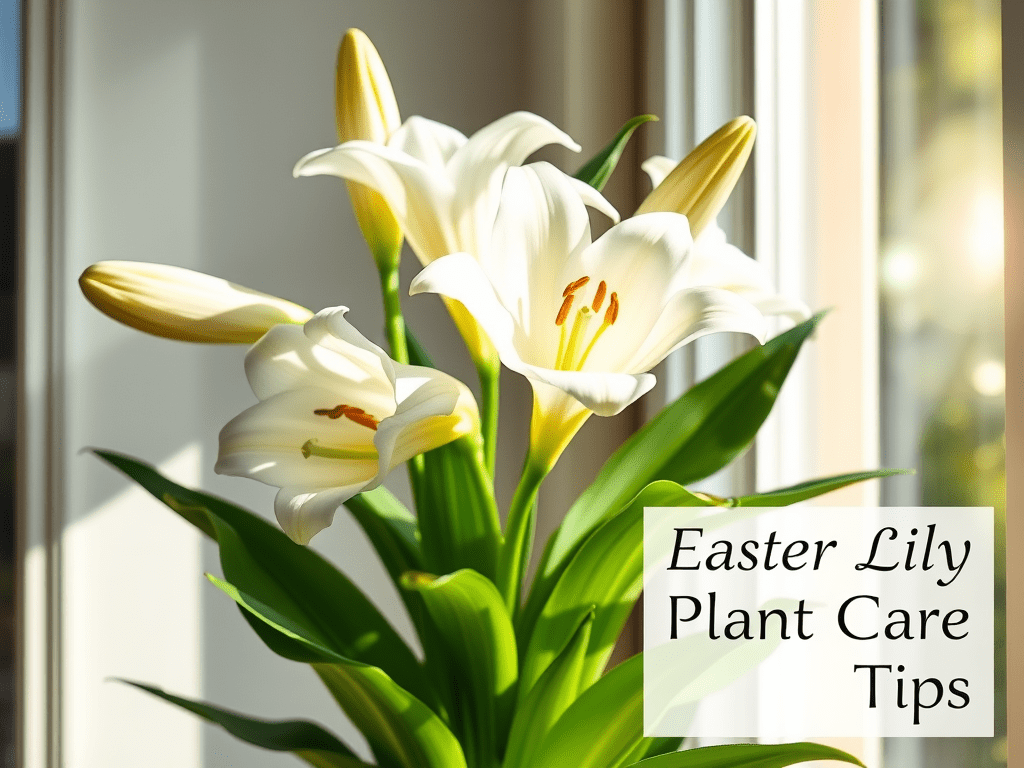
Easter lilies (Lilium longiflorum) are those beautiful, trumpet-shaped white flowers that often show up around springtime, especially during Easter celebrations. They’re elegant, fragrant, and surprisingly easy to care for — if you know what they like! Let’s dive into how to keep your Easter lily happy and healthy.
🌞 Light
Easter lilies love bright, indirect light. If you’re keeping it indoors, place it near a sunny window but out of direct, harsh afternoon sun — too much direct light can scorch the leaves. A spot with morning sunlight or filtered light is ideal.
If you decide to move your Easter lily outdoors, it’ll thrive in a spot with partial shade or filtered sunlight, especially in the warmer months.
💧 Watering
These plants prefer their soil to be evenly moist but never soggy. Water your Easter lily when the top inch of soil feels dry to the touch. Be careful not to overwater — good drainage is key to preventing root rot.
When watering:
- Water thoroughly until it runs out the bottom of the pot.
- Empty any excess water from the saucer to keep the roots healthy.
In drier indoor environments or hotter weather outdoors, you might need to water more often.
🌱 Soil
Easter lilies grow best in well-draining, slightly acidic to neutral soil. A quality potting mix with added perlite or sand will help improve drainage. If planting outside, make sure the garden soil drains well — heavy clay soils should be amended with compost or sand.
🏡 Indoors or Outdoors?
- Indoors: Easter lilies are often grown indoors as a decorative plant around spring. After the blooms fade, you can either keep it as a houseplant (it may go dormant) or move it outside.
- Outdoors: Once the danger of frost has passed, you can transplant your Easter lily outdoors. They’re perennial in USDA zones 4-9, meaning they’ll come back year after year with proper care.
🐾 Is It Safe for Pets?
🚨 Important Note: Easter lilies are highly toxic to cats — even a small nibble on a leaf or a sip of water from the vase can be very dangerous, causing kidney failure.
For dogs and other pets, they aren’t considered as toxic, but it’s still best to keep them out of reach as they can cause stomach upset if chewed.
If you have curious kitties in your home, it’s safest to either skip Easter lilies or keep them in a room your pets can’t access.
🌸 Final Tips
- Remove spent flowers to encourage longer blooming.
- Avoid placing the plant near heating or cooling vents.
- If planting outdoors, give your lily space — about 12-18 inches apart from other plants.
With a little attention and the right care, your Easter lily can bring beauty to your home or garden well beyond Easter!
 The-Dirty-Hoe.com