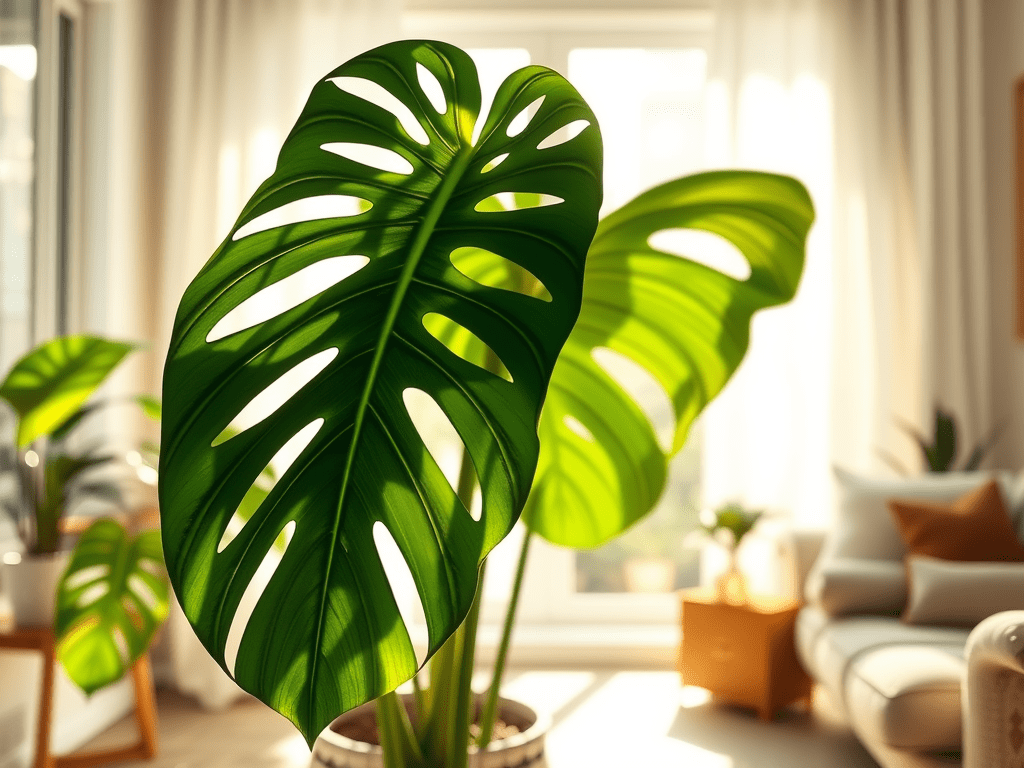
Few houseplants are as instantly recognizable as the Monstera deliciosa. With its lush green leaves and dramatic natural fenestrations (those eye-catching holes and splits), the Monstera has earned its place as a must-have in homes and offices. While it looks tropical and exotic, it’s surprisingly easy to care for once you know the basics.
Let’s dive into how to keep your Monstera thriving, from light and watering to propagation and overall care.
☀️ Light Needs
Monsteras love bright, indirect light. Think of the dappled sunlight they’d get under a jungle canopy. Too much direct sun can scorch their leaves, while too little light may cause them to grow leggy and produce fewer splits.
- Best spot: Near an east-facing window or a few feet back from a south or west window.
- Low light warning: Monsteras can survive lower light, but growth will slow, and leaves may stay small without splits.
💧 Watering Tips
Monsteras prefer soil that’s lightly moist but never soggy.
- Check first: Stick your finger 1–2 inches into the soil. If it feels dry, it’s time to water.
- Water thoroughly: Give the plant a deep drink until water drains from the bottom of the pot, then empty the saucer.
- Winter care: In cooler months, reduce watering as growth slows.
👉 Overwatering is the most common mistake—watch for yellowing leaves as a sign of too much water.
🌱 Propagation
Monsteras are easy to propagate, which makes them great for sharing with friends.
- Find a node: Look for a stem section with a leaf and an aerial root (those little brown nub-like roots).
- Cut below the node: Use clean, sharp scissors or shears.
- Root in water or soil:
- Water method: Place the cutting in a jar of water, changing the water every few days until roots are a few inches long.
- Soil method: Plant directly in moist, well-draining potting mix, keeping it humid until roots establish.
🌿 General Care Tips
- Soil: Use a chunky, well-draining mix (potting soil + perlite + orchid bark works well).
- Humidity: Monsteras enjoy extra humidity but adapt fine to average homes. A pebble tray or occasional misting can help.
- Fertilizer: During spring and summer, feed monthly with a balanced houseplant fertilizer.
- Support: As Monsteras grow, they often need a moss pole or trellis to climb on—just like in the wild.
✨ Final Thoughts
Caring for a Monstera is rewarding because it responds quickly to good care, showing off new leaves with each growth spurt. With proper light, the right watering schedule, and occasional pruning or propagation, your Monstera will become a stunning, statement-making plant that can live for decades.
 The-Dirty-Hoe.com