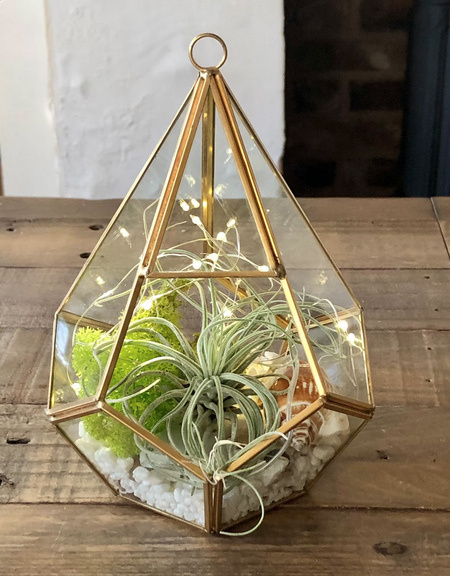
Air plants have a quiet magic about them. No soil, sculptural leaves, and just enough wild personality to feel like living art. The terrarium style in the photo—gold geometric glass, soft stones, glowing lights, and lush air plants—is a perfect example of how simple elements can come together to create something truly special.
Let’s walk through how to create this look step by step, then finish with easy air plant care so your display stays happy and healthy.
Why Air Plants Are Perfect for Terrariums
Air plants (Tillandsia) don’t need soil, which makes them ideal for glass containers and decorative displays. They absorb moisture and nutrients through their leaves, not roots, allowing you to design freely without worrying about drainage or mess.
This makes them perfect for:
- Glass terrariums
- Tabletop décor
- Giftable plant displays
- Low-maintenance plant lovers
Supplies You’ll Need
To recreate this look, gather the following:
- A glass geometric terrarium (open or vented)
- 1–2 medium air plants (like Tillandsia ionantha or xerographica)
- Decorative stones or crystal chips (white or clear work beautifully)
- Preserved moss (green or chartreuse adds contrast)
- Battery-operated fairy lights
- Tweezers or small tongs (optional but helpful)
Step-by-Step: Creating the Look
Step 1: Prepare the Base
Start by adding a thin layer of decorative stones to the bottom of the terrarium. This creates visual weight and reflects light beautifully, especially when paired with fairy lights.
💡 Tip: Keep the layer shallow—air plants don’t need depth, just design balance.
Step 2: Add Fairy Lights
Gently coil the fairy lights inside the terrarium, tucking the wire along the edges or around the base. Leave the battery pack outside or discreetly hidden behind the display.
This soft glow adds warmth and turns your terrarium into an evening statement piece.
Step 3: Place the Moss
Add small sections of preserved moss around the stones. Don’t pack it tightly—think soft, natural clusters. The moss adds texture and gives the arrangement a forest-floor feel without holding moisture against the plants.
Step 4: Position the Air Plants
Nestle your air plants gently on top of the stones and moss. Let their leaves arch naturally—avoid forcing them into place.
For balance:
- Place the larger air plant slightly off center
- Use a smaller plant or moss to fill visual gaps
Air plants love airflow, so make sure they’re not pressed against the glass.
Step 5: Final Touches
Adjust the lights, fluff the moss, and rotate the terrarium until it looks good from all angles. The gold frame, glowing lights, and soft greenery should feel airy, not crowded.
Air Plant Care: Keep It Simple
Once your terrarium is styled, caring for air plants is refreshingly easy.
Light
- Bright, indirect light is best
- Near a window with filtered sunlight works great
- Avoid harsh, direct sun through glass—it can scorch leaves
Water
- Remove air plants from the terrarium to water
- Soak in room-temperature water for 20–30 minutes once a week
- Gently shake off excess water
- Let them dry completely before returning them to the terrarium
⚠️ Never leave air plants sitting in water or return them wet to a closed container.
Airflow
Air plants need good airflow to stay healthy. If your terrarium is mostly closed, remove the plants regularly for watering and drying.
Signs of a Happy Air Plant
- Firm, open leaves
- Subtle color changes (some blush pink before blooming)
- New leaf growth from the center
If leaves curl tightly or feel dry, increase watering slightly.
This style of air plant terrarium isn’t just décor—it’s a tiny ecosystem that brings warmth, light, and nature indoors. Whether you place it on a shelf, coffee table, or desk, it’s a beautiful reminder that plants don’t need soil to thrive.
Simple. Sculptural. And full of life. 🌱
 The-Dirty-Hoe.com
Very interesting!! I’ve never grown one!
LikeLike