
February may still feel like winter is lingering, but this is one of the most important months in the garden. Beneath the soil, nature is quietly preparing for spring, and a little effort now sets the stage for healthier plants, stronger roots, and a more joyful growing season ahead.
Let’s walk through how to prepare your garden beds, enrich your soil, care for houseplants, and support garden wildlife as we transition toward spring.
Preparing Your Garden for Spring
Think of February as your garden’s gentle wake-up call. The goal isn’t heavy planting yet—it’s preparation.
Steps to take this month:
- Clean up garden beds by removing old leaves, spent plants, and lingering weeds to prevent pests and disease.
- Loosen compacted soil using a garden fork. This improves airflow and helps roots grow more easily.
- Check drainage after winter rains. If soil stays soggy, compost will help improve structure.
- Plan your garden layout for vegetables, herbs, and flowers so you’re ready when planting time arrives.
🌱 Tip: Avoid walking directly on garden beds while soil is wet—this can compact the soil and make root growth harder later.
The Best Compost to Mix with Soil for Seedlings
Healthy plants start with healthy soil. When preparing garden beds for seedlings, your compost choice matters.
Best compost options for spring planting:
- Fully finished homemade compost – Rich, balanced, and gentle on young plants
- Worm castings – Excellent for seedlings, improving root development and soil life
- Leaf mold compost – Great for moisture retention and improving soil texture
How to prepare your soil mix:
- Combine 2 parts garden soil with 1 part compost
- For seedling areas, mix in a small amount of worm castings for an added nutrient boost
🌼 Avoid fresh manure or strong fertilizers—these can burn tender roots.
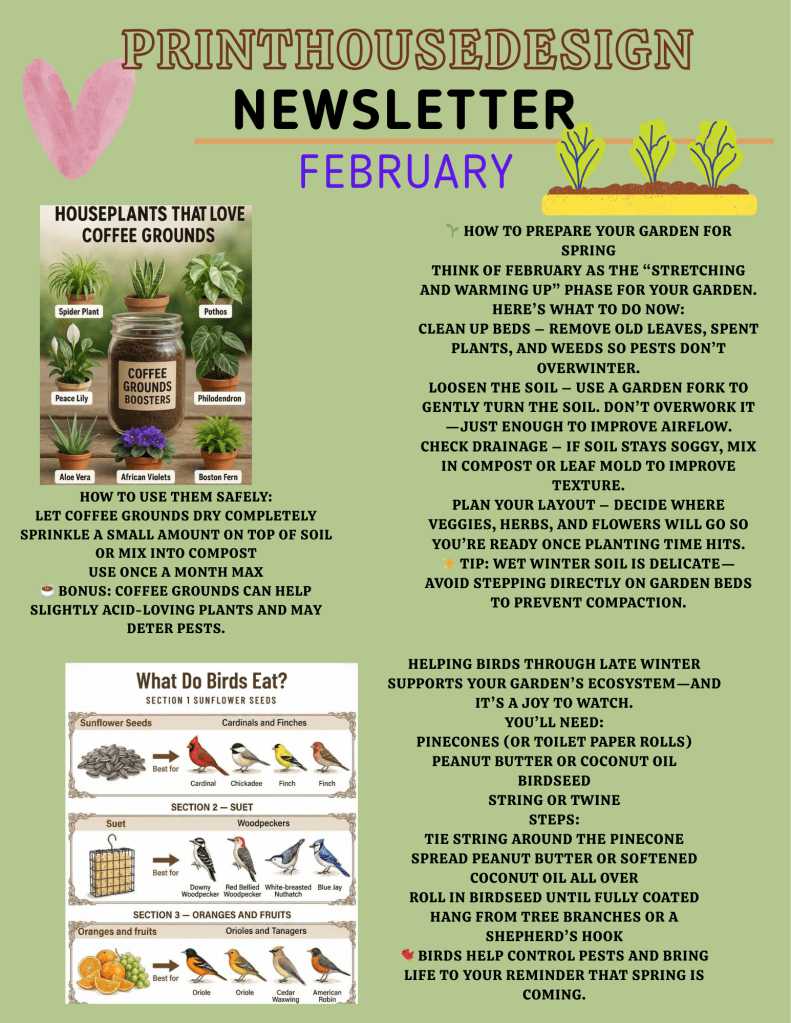
Houseplants That Love Coffee Grounds
If you’re a coffee drinker, your houseplants may enjoy the leftovers—when used correctly.
Houseplants that benefit from coffee grounds:
- Snake Plant
- Pothos
- Philodendron
- Peace Lily
- African Violet
How to use coffee grounds safely:
- Allow used grounds to dry completely
- Sprinkle a very small amount on top of the soil or mix into compost
- Use no more than once a month
☕ Coffee grounds can slightly increase soil acidity and add organic matter—but moderation is key.
How to Make a Winter Bird Feeder for Your Garden
Late winter is a critical time for birds. Supporting them now helps create a healthier garden ecosystem later.
You’ll need:
- Pinecones or toilet paper rolls
- Peanut butter or coconut oil
- Birdseed
- String or twine
Steps:
- Tie string securely around the pinecone
- Spread peanut butter or softened coconut oil over the surface
- Roll in birdseed until fully coated
- Hang from tree branches or a garden hook
🐦 Birds help manage garden pests and bring life and movement to your winter landscape.
February Garden Thoughts
February reminds us that growth doesn’t always look busy. Preparation, patience, and care now lead to stronger plants and a more successful spring garden.
Take this time to plan, nurture your soil, and enjoy the quiet beauty of the season—spring will be here before you know it 🌷
 The-Dirty-Hoe.com
Another February chore: prune grape vines before any new growth starts.
LikeLiked by 1 person