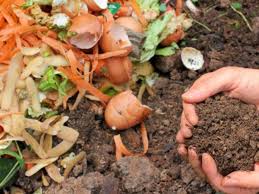
Starting a garden

Wondering how to start a garden? Find your confidence with these gardening tips.

Starting a garden is just like real estate it’s all about location. Place your garden in a part of your yard where you’ll see it regularly (out of sight, out of mind definitely applies to gardening). That way, you’ll be much more likely to spend time in it.

Misjudging sunlight is a common drawback when you’re first learning to garden. Pay attention to how sunlight plays through your yard before choosing a spot for your garden. Most edible plants, including many vegetables, herbs, and fruits, need at least 6 hours of sun in order to flourish.

One of the best gardening tips you’ll ever get is to plan your new garden near a water source. Make sure you can run a hose to your garden site, so you don’t have to carry water to it each time your plants get thirsty. The best way to tell if plants need watering is to push a finger an inch down into the soil (that’s about one knuckle deep). If it’s dry, it’s time to water.

When starting a garden, one of the top pieces of advice is to invest in soil that is nutrient-rich and well-drained. Achieve this just-right blend by mixing 3 inches of Miracle-Gro® All Purpose Garden Soil into the top 6 to 8 inches of existing soil if you’re planning to plant in the ground. If you’re planting in a raised bed, use Miracle-Gro® Raised Bed Soil, which is the perfect weight and texture for raised bed growing.

When space is at a best, look to container planting. You can grow many plants in pots, including vegetables, herbs, flowers, fruit trees, berries, and shrubs. When gardening in containers, use a pot that’s large enough for the plant it’s hosting, and fill it with Miracle-Gro® Moisture Control® Potting Mix. Not only is it specially formulated to help plants in pots thrive, but it also helps protect against over- and under-watering. You can find wall hanging planters at our Gardenocity shop and small animal shape planters for indoors at our Printhousedesign1 shop on Etsy.

It’s important to choose plants that match your growing conditions. This means putting sun-loving plants into a sunny spot, choosing heat-tolerant plants in warm climates, and giving ground-gobbling vines like pumpkins and melons ample elbow room (or a trellis to climb). Do your homework and pick varieties that will grow well where you live and in the space you have. And to get a step up on success when growing veggies and herbs, start with vigorous young plants from Bonnie Plants® instead of trying to grow from seed.

Planting too early (or late) in the season can spell disaster for your garden. You need to know the last average spring frost date for your area so you don’t accidentally kill plants by putting them out prematurely. It’s also good to know your first average fall frost date so that you get your plants harvested or moved indoors before late-season cold damages them.

Lastly, apply a layer of mulch that’s 2 to 3 inches deep around each plant. This will help reduce weeds by blocking out the sun, and reduce moisture loss through evaporation, so you have to water less. For a polished look, put down a layer of Scotts® bagged mulch. Or, you can put down straw, shredded leaves, pine straw, or some other locally available material.

Do you have any tips to share? If so please leave a comment..

Creating a terrarium

In short, terrariums are complete, enclosed miniature plant ecosystems. By creating a terrarium, you get a miniature glasshouse, or a small biosphere, right there on your tabletop.

However, not all plants are suitable to be grown in every terrarium. Closed terrarium plants need to endure specific conditions – high humidity, low airflow, and limited space.

Small terrarium plants are the ones that you can include in a classic, closed, jar-type terrarium, but also in many other types of terrarium setups. Their lighting requirements tend to vary, Mosses are everyone’s choice for first experiments with terrariums, but also a keeper for many experienced terrarium designers. Besides the fact that they are free and easy to find outdoors, mosses have a unique visual appeal. Also, they are virtually care-free and can be left in a closed terrarium for years with no interventions. They are also the most tolerant to low-light conditions.

Mosses are primitive, non-vascular plants that reproduce by spores. Although we often use the term “moss” as a singular, there are at least 12,000 moss species around the world. Obviously, not all of them live in your backyard, but you will surely be able to find several species with different textures and shades of green. That variety will add depth and playfulness to your terrarium moss patch.

Baby tears is a plant known for its ability to form mats of tiny, vividly green, bean-shaped leaves that will spread over everything and “spill” over the sides of a pot. In a terrarium, they are ideal to fill out empty spots.This plant thrives in high humidity. Keep them out of direct sunlight and by all means, prevent dry conditions. Also, do not handle the plant roughly, as the little branches are brittle and the plant can be damaged relatively easily during improper handling.

Larger terrarium plants are suitable for large jars and terrariums. After a while, you will probably have to report them or prune them to prevent them from growing out of the terrarium. Another option is to let them grow in a half-open terrarium.

Ferns give any space a fresh, forest-y feel. Unlike many large ones, Button fern is a terrarium-friendly fern since it is small enough to fit into one.

Carnivorous plants will thrive in the humid conditions of a terrarium. However, there are a couple of special requirements:

The terrarium has to be an open one, for two main reasons. First – there needs to be a way for insects your plant will eat to get into the terrarium. Second – carnivorous plants enjoy direct sun exposure, and there is a chance they could overheat in a closed terrarium. Also, diseases and fungi are less likely to strike when there is some air circulation. A fishbowl-type of dish will work perfectly fine. The terrarium substrate has to be adjusted for carnivorous plants, as they prefer acidic conditions and like to grow on peat. However, this depends on the species.

If you want a truly unique planted terrarium, you should know that Air Plants (Tillandsia) are among the strangest, the most otherworldly plants you can own. Because they are so unique, they require some special care as well. Air plants belong to the Bromeliaceae family. However, unlike their stary cousin, they don’t require a substrate. In fact, many of them don’t even have roots. Amazingly, they can live only off of air, moisture and some light.

There are a couple of tips to keep your air plant terrarium healthy and marvelous. Both of them are related to watering .Interestingly, you shouldn’t water your air plants inside of the terrarium; you will have to take them out and soak them or mist them, and then let them dry completely before putting them back into the terrarium.

There should be condensation or any moisture whatsoever in your air plant terrarium.

What this also means is that you could completely rearrange your plants every time you take them out for a dip.

Also, you should always use an open terrarium to ensure air circulation. Air plants are ideal for tiny, hanging terrariums.

These are a few examples of plants for your own terrarium. You can find air plants available at our Etsy shop: http://www.printhousedesign.com Also our garden shop http://www.thegardenocityshop.com has succulents & soon will have terrariums for you to purchase.

How to grow succulents from a cutting

Did you know you can plant succulent cuttings straight away?

Here’s how

Step 1) Carefully snap off a leaf from where it’s attached to the main stem. … Step 2) Leave the cutting or leaf in a well-lit spot for 2-3 days until a callus forms over the end. Step 3) Once formed you can place straight into soil (callus first) or lie flat on soil and watch it grow.

When should I plant succulent cuttings?

They need to be kept moist and warm. Within three weeks or so, little roots and leaves will begin to sprout! It could take a few months before a succulent gets big enough for repotting It is best to plant in cooler temps

How long do succulent cuttings take to root?

About 4 weeks you should see roots…

Stem propagation: It generally takes about 4 weeks for roots to form, sometimes longer. Propagation through offsets: It generally takes about 4-10 weeks for the roots to grow once the pups have calloused over.

 You can also root a succulent in water

Most succulents can be propagated in water. You can grow roots from healthy single leaves or, if you have a stretched out succulent, you can take stem cuttings and root those. Succulents that have plump, fleshy leaves like the Echeveria plant have the best chance of success.

You can find succulent cuttings to purchase soon from our garden shop: http://www.thegardenocityshop.com

Planting Callas Lilies

Planting calla bulbs can be easy they are adaptable to the ground or in containers. I prefer containers because callas look pretty and are easy to bring indoors during the winter months. ( These plants are frost-tender, so they need to be brought indoors when it starts getting really cold at night.

To plant them, fill a large container with good quality potting soil and set the bulbs about 4 inches deep into the soil. Water well and place the container in partial shade. Callas accept sun or shade, but do best in a location that gets bright, filter light. Make sure if you plant them outside to wait until the last frost to prevent them from dying.

If you decide to plant the bulbs outside in the ground, it can be easy too. Select the same growing conditions (light & soil) and plant them at the same depth as you would grow in the container. In the autumn before it frost dig the plant up and store the bulbs indoors. Have you planted these flowers before? leave a comment if you have these flowers in your garden!

Propagating snake plant

Can snake plants be started from cuttings?

Snake plant can be started several ways. Perhaps the simplest method is to divide older plants. Snake plants, or mother-in-law tongue, as it is known by some, produces underground rhizomes that increase the size of the clump of upright shoots. Division is a way to get a large new plant quickly. This is the only way to maintain the marginal light green stripe of variegated types.

If your snake plant is not variegated, and if you’re patient, you can start new plants by taking stem cuttings. Cut the snake plant leaves into 3-4 inch long segments, cutting a notch in the upper end of each so you can tell which end is up. Its important to mark which side is up on each cutting, because the cuttings will fail to root and grow if inserted in the rooting medium upside down. Dip the lower end of the cutting in soil with rooting mix to help start off your new snake plant growth. Remember to keep the soil moist, but not soaking wet, because snake plants can rot if kept in excessively wet soil. In several months you should see new shoots developing from the base of the cutting.

Home is Where the Boat Is

Potting, Puttering & Pontooning

Cats and Trails and Garden Tales

Musings on cats, travel, gardens and life

Leaf And Twig

Where observation and imagination meet nature in poetry.

phillipsplace

A new beginning, mobile home living, adding our style inside and out.

Ruth E. Hendricks

Daily Journal of Life in Pittsburgh

The Haute Mommy Handbook

Motherhood Misadventures + Creative Living

Suzanne's Mom's Blog

Arts, Nature, Good Works, Luna & Stella Lockets & Birthstones

𝑻𝒐𝒓𝒏𝒂𝒅𝒐 𝑶𝒇 𝑪𝒉𝒂𝒐𝒔 🌪

Thoughts, experiences and learnings in a turbulent time

Sarah Rajkotwala - Author & Spiritual Teacher blog

Gardening Fairies Flowers Spirituality Angels Love Joy

Ideas and Advice for How To Live a Joyful and Empowered Life.

All Things Empowering - Healing Ourselves & Earth, Self-Sufficiency, Food Forests, Gardening, Art, Road Trips, Preserving, Foraging, Permaculture, Homesteading and More!

AmericaOnCoffee

We’re just inviting you to take a timeout into the rhythmic ambiance of our breakfast, brunch and/or coffee selections. We are happy whenever you stop by.

Heart to Hearth Cookery

Sharing my Experimental Archaeology of Food

The Herb Society of America Blog

Learn • Explore • Grow