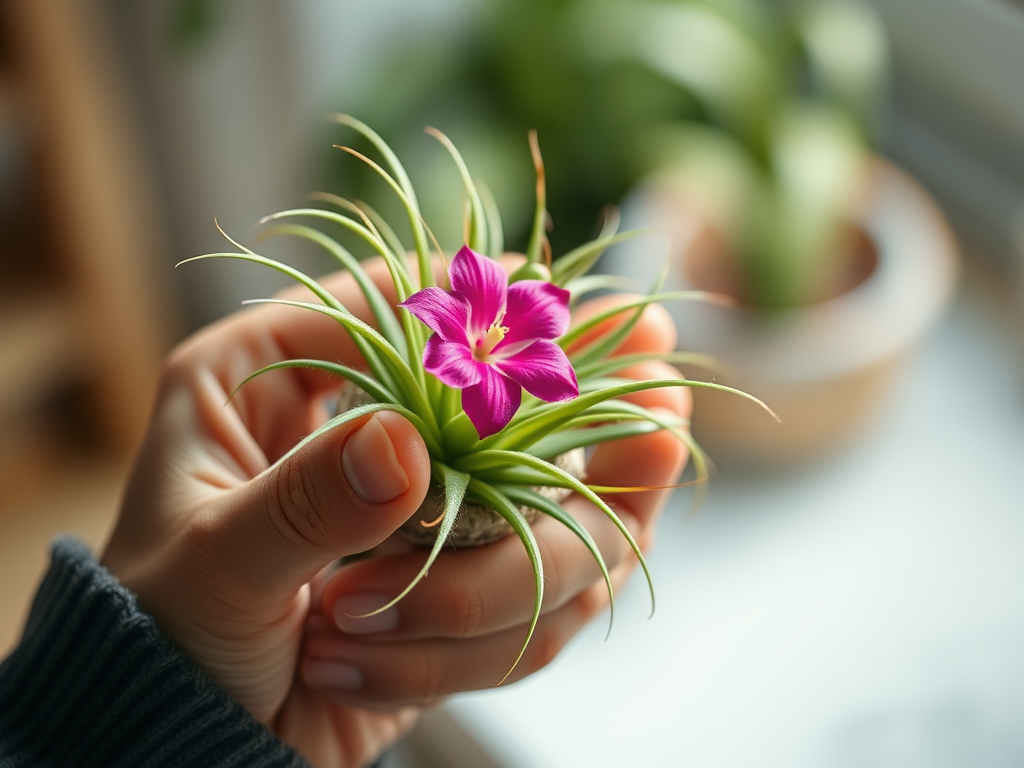
Hello, green thumbs! Today, let’s dive into one of the most exciting stages of air plant care—encouraging your plant to bloom! While air plants (Tillandsia) are known for their versatility and ease, it can take a bit of extra care to see that beautiful, colorful flower. Here are some tips to help your air plants thrive and blossom.
1. Understand the Blooming Cycle 🌱
Air plants usually bloom only once in their lifetime, so it’s a special event! The bloom is often short-lived but beautiful, showing off vibrant pinks, purples, reds, or oranges. Blooming typically signals the end of an air plant’s life cycle, but don’t worry—after blooming, air plants produce “pups” (baby plants) that will continue the cycle.
2. Provide Proper Lighting ☀️
Air plants thrive in bright, indirect sunlight, and this is especially important for blooming. If they’re indoors, place them near a bright window or under fluorescent lighting. Too much direct sunlight can scorch them, so avoid positioning them in the path of strong rays. Outdoors, they love dappled sunlight or partial shade.
3. Regular Soaking 💧
To encourage blooming, keep your air plant well-hydrated. Soak it in room-temperature water for 20–30 minutes once a week. After soaking, shake off excess water and let it dry upside down to prevent any water from sitting in the base, which can cause rot. For dry or hot climates, a light misting every couple of days can keep it extra happy.
4. Add a Little Air Plant Fertilizer 🌱
Using a bromeliad or air plant-specific fertilizer once a month can boost your plant’s blooming potential. Dilute the fertilizer in water according to the instructions, and soak your air plant in the mixture as usual. Avoid over-fertilizing, as this can cause leaf damage. A little boost goes a long way!
5. Temperature and Humidity 🌡️
Air plants are happiest in temperatures between 50–90°F, so try to keep them in these ranges if possible. While they can adapt to drier conditions, air plants naturally prefer moderate to high humidity, which helps stimulate blooming. You can increase humidity by misting or by placing a small dish of water nearby (though not directly under the plant).
6. Be Patient 🌼
Blooming is a natural process that often requires time. Some air plants, especially larger varieties, can take years to bloom, so don’t get discouraged if you don’t see blooms right away. With consistent care, your air plant will reward you in its own time.
Bonus Tip: Ethylene Gas Trick 🍎
Some air plant enthusiasts swear by using ethylene gas to encourage blooming! Place your air plant in a sealed container with a ripe apple or banana for a few days. The gas released from the fruit can trigger blooming. Be careful not to leave it too long, though, as too much exposure can harm the plant.
Blooming and Beyond 🌈
Once your air plant blooms, continue the same care routine. After the bloom fades, keep an eye out for pups growing at the base. These can be separated when they’re about half the size of the parent plant or left to create a cluster—a mini air plant family!
Happy blooming, and let me know if you see flowers on your air plants! Share your photos and stories—I’d love to see them!
Happy gardening!
 The-Dirty-Hoe.com
Thank you for this post. I’m going to look into getting an air plant or several 😁
LikeLike