
What You Can Do to Help Them on Their Fall Journey
September, this is a wonderful time to talk about monarchs—especially because the 2026 fall migration is already moving through Texas and Oklahoma. Journey North reported the first Texas and Oklahoma roosts on September 22, with monarchs also being reported in Kansas and Colorado.
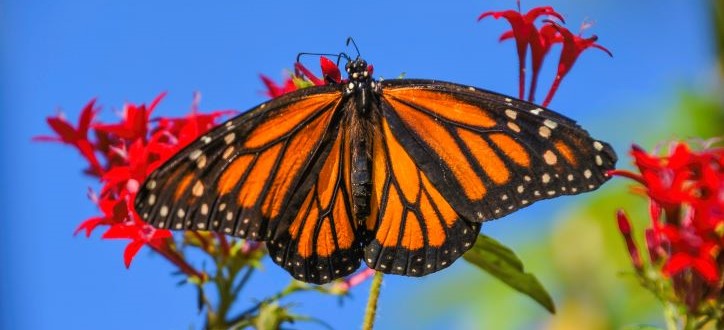
There is something magical about seeing a monarch butterfly floating through the garden on a crisp fall day. Their bright orange wings seem to announce that autumn has arrived—but these beautiful butterflies aren’t simply enjoying the cooler weather.
They are on a remarkable journey south. 🧡🦋
Right now, monarchs across North America are beginning or continuing their fall migration toward their wintering grounds. And if you live along their migration route, your garden can become an important little rest stop along the way.
🌎 Where Are the Monarchs Migrating Right Now?
The eastern monarch population spends its summer across the northern and central United States and southern Canada. Each fall, these butterflies gradually funnel southward through the central and southern United States before crossing into Mexico.
Texas is especially important. Much of the eastern population passes through Texas on its way to the mountains of central Mexico. In fact, monarchs from across the eastern United States converge into a migration corridor that narrows as they move south.
In late September and October, you may see migrating monarchs passing through or stopping in states including:
🌻 Minnesota, Wisconsin and Michigan
🌻 Iowa and Illinois
🌻 Indiana and Ohio
🌻 Missouri and Kansas
🌻 Nebraska
🌻 Oklahoma
🌻 Arkansas
🌻 Texas
🌻 Louisiana and other parts of the southern U.S.
Monarchs don’t all follow one perfectly straight line, though. Weather, wind, food availability and other conditions can influence their route.
As of September 25, 2026, Journey North reported monarch roosts in Texas and Oklahoma, with the leading edge of migration having reached northern Oklahoma and Texas. Reports had also been coming from southwestern Kansas and Colorado.
🦋 Why Are Monarchs Traveling So Far?
The monarchs we see migrating in the fall are part of a special migratory generation.
Unlike summer monarchs, which may live only a few weeks, these butterflies can live for 8–9 months. Their job is to make the long journey south, survive the winter and eventually begin the return journey north in spring.
Eastern monarchs can travel as much as 3,000 miles to reach their wintering grounds in central Mexico.
Think about that the next time you see one resting on a flower in your garden!
That little butterfly may have already traveled hundreds of miles—and still has a long way to go.
🌼 Your Garden Can Be a Monarch Rest Stop
During migration, monarchs need nectar-rich flowers to provide the energy required for their journey.
A garden doesn’t have to be enormous to help. Even a small planting area, flower bed or container garden can provide valuable habitat.
Consider planting flowers that bloom in late summer and fall, such as:
🌼 Asters
🌻 Native sunflowers
🌸 Goldenrod
🌺 Joe-Pye weed
🌼 Zinnias
🌸 Ironweed
🌼 Native salvias
The goal is to have a variety of flowers blooming throughout the growing season so butterflies can find food when they need it most.
🌿 Don’t Forget the Milkweed!
If you want to create a true monarch garden, milkweed is essential.
Milkweed is the host plant for monarch caterpillars. Monarch butterflies lay their eggs on milkweed, and the tiny caterpillars eat it as they grow.
For the best results, choose milkweed species native to your region. Xerces Society specifically recommends regional native milkweeds and advises avoiding tropical milkweed.
And don’t be too quick to tidy everything up in the fall. A slightly more natural garden can provide shelter and food for many different insects.
🚫 Skip the Pesticides When Possible
One of the simplest ways to make your garden safer for butterflies is to reduce or eliminate pesticide use whenever possible.
Insecticides can harm monarch caterpillars and adult butterflies, while herbicides can remove milkweed and other native plants that monarchs depend upon.
Instead, try encouraging beneficial insects, hand-picking pests when practical, and choosing plants that are well suited to your growing conditions.
🪴 Even a Container Garden Can Help
Don’t have a large yard?
No problem!
A sunny patio, balcony or porch can still provide nectar for passing butterflies. Plant a container with several nectar-rich flowers and place it somewhere sunny where you can enjoy watching the visitors.
You might even discover that your little container garden becomes a butterfly café! 🦋🌸
📸 Become a Monarch Observer
One of the most fun things you can do is watch and document the migration.
When you see a monarch, take a photo and make a note of:
📅 The date
📍 Your location
🌼 What plant it visited
🦋 Whether it was alone or part of a group
🌤️ The weather conditions
Organizations such as Journey North use observations from people across North America to track monarch migration and other seasonal changes.
🧡 Let’s Give Them a Garden to Remember
Fall is more than pumpkin season and colorful leaves. It is also migration season.
The next time a monarch flutters through your garden, stop for a moment and watch.
That butterfly may be traveling thousands of miles toward Mexico, depending on the population and route. A patch of flowers in your backyard could provide the nectar it needs for another leg of its incredible journey.
So plant a little more.
Leave a few flowers blooming.
Add some native milkweed.
Skip unnecessary pesticides.
And make your garden a welcoming place for these beautiful travelers.

