
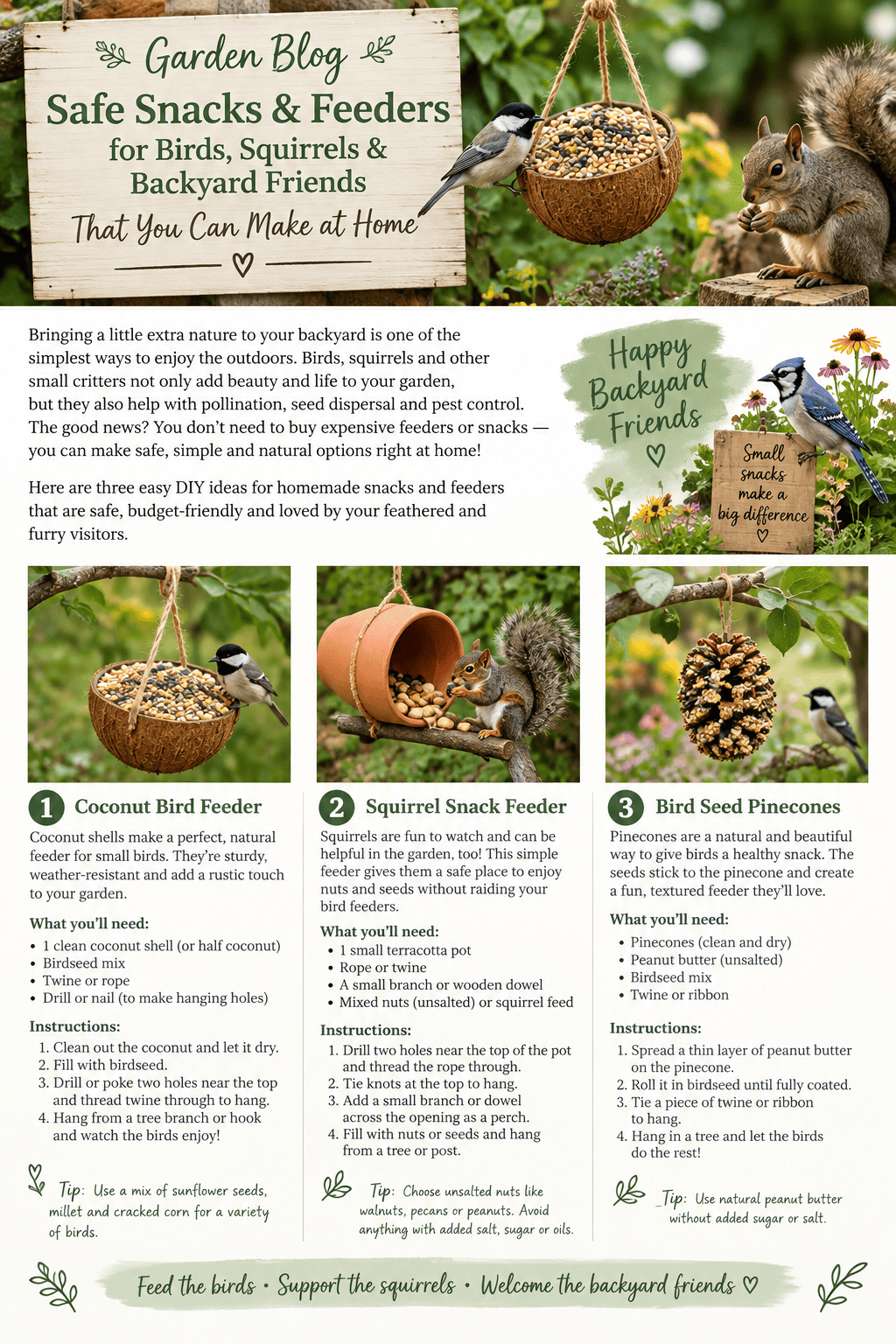
There is something magical about watching birds flutter around the garden, squirrels scamper along a fence, and little backyard visitors stop by for a snack. You don’t need an expensive feeder or a fancy garden to welcome wildlife into your outdoor space. With a few simple ingredients and supplies, you can create homemade treats and feeders that bring nature a little closer to home!
Today, we’re sharing four easy, nature-inspired DIY projects to help you create a backyard snack station for your feathered friends and furry visitors. These ideas are budget-friendly, fun for families, and a wonderful way to add a little more wildlife-friendly charm to your garden.
1. Pinecone Bird Feeders
Pinecone feeders are one of the easiest backyard crafts, and they’re perfect for making with children on a nature-filled afternoon.
What you’ll need:
- Large, clean, dry pinecones
- Plain, unsalted peanut butter with no xylitol
- Wild birdseed
- Natural cotton twine
Instructions:
- Tie a piece of twine securely around the top of a dry pinecone.
- Spread a thin layer of peanut butter between the pinecone scales.
- Roll the pinecone in birdseed until well coated.
- Hang it from a sturdy branch in a sheltered spot where you can watch the birds visit.
Garden tip: Use a birdseed mix suited to the birds in your area. Black-oil sunflower seeds are a great option for attracting a variety of backyard birds.
2. A Simple Squirrel Snack Station
Squirrels are entertaining little garden visitors! Instead of letting them raid your bird feeders, try creating a separate feeding station just for them.
What you’ll need:
- A small, sturdy, untreated wooden platform
- A shallow, unpainted terracotta saucer
- Unsalted walnuts, hazelnuts, or pecans
- A secure outdoor post or sturdy platform
Instructions:
- Place the wooden platform in a stable location away from busy walkways.
- Set the shallow saucer on the platform so it cannot easily tip over.
- Add a small handful of unsalted nuts in their shells.
- Position the station away from bird feeders and house entrances, then observe your new visitors from a distance.
Garden tip: Keep portions small, and don’t leave piles of food sitting out. Avoid salted or seasoned nuts, sweets, bread, and processed snacks. Nuts are a treat, not a complete diet for squirrels.
Always check local wildlife guidance before establishing a regular feeding station.
3. Homemade Sunflower Seed Bird Feeder
Sunflower seeds are a backyard favorite for many seed-eating birds. This simple feeder is easy to make with a few household supplies.
What you’ll need:
- A clean, shallow wooden tray or a purpose-made bird feeder
- Black-oil sunflower seeds
- A sturdy hanging bracket or secure post
- A small amount of natural twine, if needed
Instructions:
- Choose a shallow tray with drainage holes so rainwater doesn’t collect.
- Secure the feeder to a sturdy post or hang it from a strong branch.
- Add a small amount of black-oil sunflower seeds.
- Position it where birds have nearby shrubs or trees for shelter, while keeping it away from places where cats can hide and pounce.
Garden tip: Refill only what birds can eat in a day or two. Wash the feeder regularly, remove wet or moldy seed, and allow it to dry before refilling.
4. A Refreshing Water Station for Backyard Friends
Food isn’t the only way to help wildlife. A reliable source of clean water can be especially helpful during hot, dry weather.
What you’ll need:
- A shallow, sturdy terracotta saucer
- Clean water
- A few clean, flat stones
- A stable, shaded location
Instructions:
- Place the saucer on level ground or a sturdy garden table.
- Add a few stones to create shallow places where small birds and insects can safely reach the water.
- Fill with fresh water, keeping the depth shallow.
- Empty, scrub, and refill the dish daily, or more often when it becomes dirty.
Garden tip: During freezing weather, check the water frequently. Never add antifreeze, salt, or other chemicals to keep water from freezing.
Important Safety Tips for Your Backyard Wildlife
Before setting out your homemade feeders, keep these simple guidelines in mind:
- Choose safe foods: Offer appropriate birdseed and small quantities of plain, unsalted nuts for squirrels. Never provide moldy food, chocolate, salty snacks, or foods containing artificial sweeteners such as xylitol.
- Keep feeders clean: Dirty feeders can spread disease. Clean them regularly and remove old, wet food.
- Avoid entanglement: Skip fishing line, thin plastic netting, and loose mesh that can trap feet, wings, or beaks.
- Protect wildlife from pets: Place feeders where birds have room to escape and cats cannot easily reach them.
- Keep nature wild: Feeding should supplement, not replace, natural food sources. Native plants, seed heads, berry-producing shrubs, and healthy garden habitats provide lasting benefits.
Make Your Garden a Little Wildlife Haven
You don’t need a big yard to make a difference. A homemade pinecone feeder, a small squirrel snack station, or a simple water dish can turn an ordinary garden corner into a wonderful place to observe nature.
Try one of these projects this weekend, grab a cup of coffee or tea, and spend a few quiet minutes watching your visitors arrive. You might be surprised by how many different birds and little creatures stop by!
I’d love to hear from you: Which DIY project will you try first? Share your backyard wildlife photos and tell us which feathered or furry friends visit your garden.
Happy gardening and happy wildlife watching!

