Understanding Different Varieties
Different varieties of air plants have specific environmental requirements. Those with soft, thin leaves, including Spanish Moss, thrive in cooler temperatures. If you notice leaves curling dramatically or appearing droopy, move them indoors. These plants require adequate air circulation and should be kept away from direct sunlight and enclosed receptacles.
On the other hand, air plants with stiff or thicker leaves, such as Xerographicas, are hardier and require less water. They adapt well to warmer, drier conditions and are more tolerant of direct sunlight.
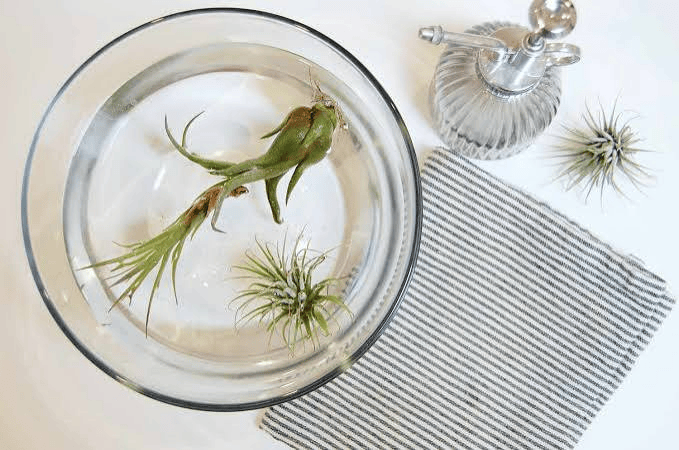
The two primary methods for watering air plants (Tillandsia) are soaking and misting
1. Soaking
- How it works: Submerge the air plant completely upside down or face-down in a bowl, sink, or basin of collected bottle or rain water for 10 to 30 minutes (up to an hour for very dry plants).
- Frequency: Done about once every 1 to 2 weeks.
- Best for: Green, smooth-leaved (mesic) air plants, indoor plants in low-humidity homes, or dehydrated plants.
- Crucial step: Gently shake off excess water and place the plant upside down on a towel or in a dish rack to dry completely within 3 to 4 hours to prevent rot. Avoid soaking plants that are glued to heavy mounts, blooming flowers, or bulbous/fuzzy species that trap water easily
Misting (or Spraying)
- How it works: Use a spray bottle or mister to thoroughly spritz the leaves and tips, or heavy-spray until water drips off the plant.
- Frequency: Done every 1 to 3 days, or 2 to 3 times a week as a supplement or primary routine.
- Best for: Mounted or glued air plants, fuzzy/arid-climate varieties (like Tillandsia tectorum), or interim hydration between deep soaks.
- Crucial step: Aim for the leaves and avoid letting pools of water sit stagnant in the core or base.
- Proper watering is at the heart of air plant care, and it’s essential to understand the specific requirements to keep your plants healthy and vibrant.