
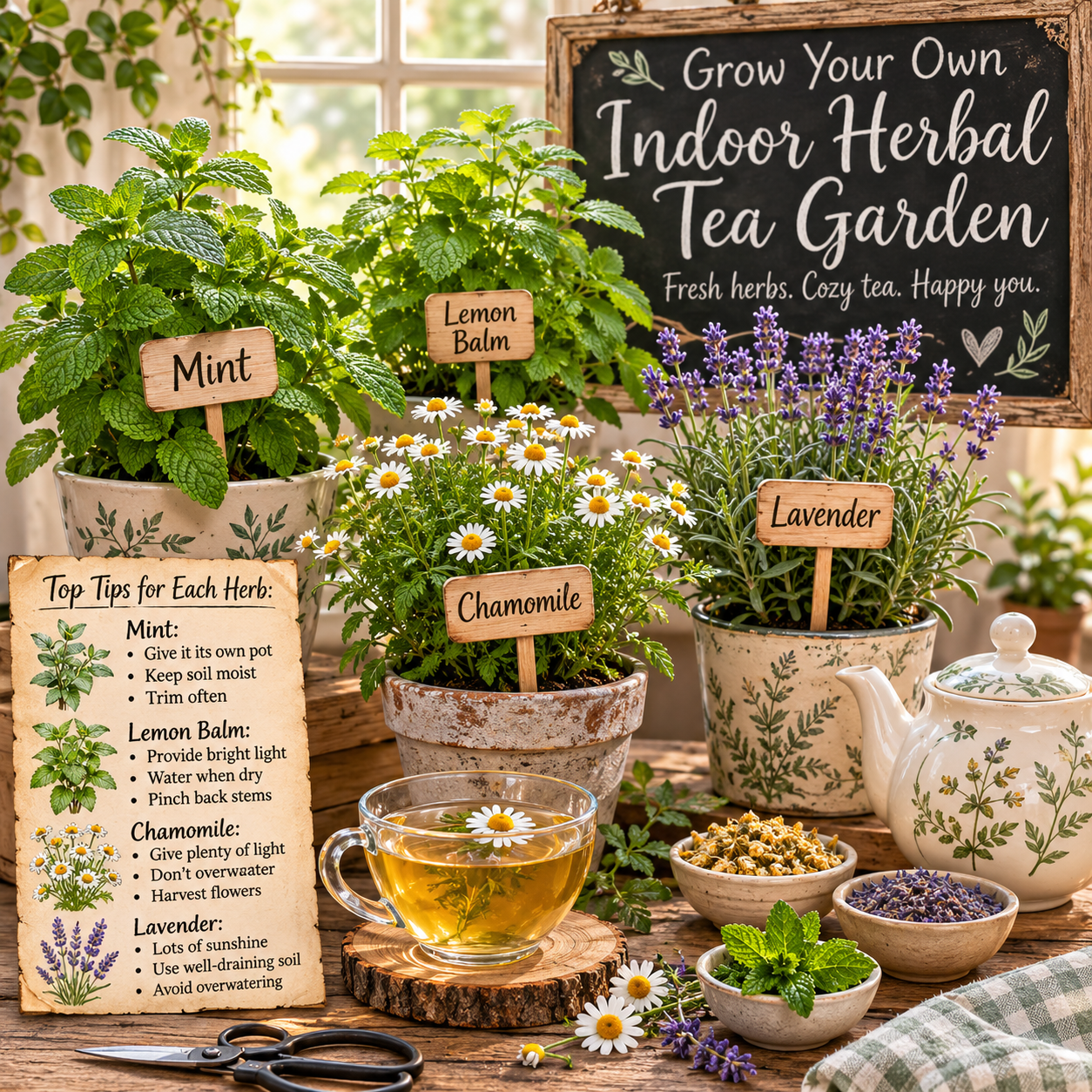
here’s something wonderfully comforting about brewing a cup of tea made from herbs you’ve grown yourself. Imagine reaching into your kitchen windowsill, snipping a few fresh leaves, and filling your teacup with a fragrant, homemade herbal infusion. It’s a little touch of nature that makes an ordinary day feel special.
You don’t need a backyard, greenhouse, or fancy gardening equipment to get started. An indoor herbal tea garden can be grown right in your kitchen, on a sunny windowsill, or on a small plant shelf. With just a few pots, sunlight, and a little care, you can grow herbs that are beautiful, fragrant, and useful all year long.
Whether you’re a beginner gardener or simply love the idea of growing your own ingredients, let’s get started on creating your very own tea garden!
🌿 Setting Up Your Indoor Tea Garden
Before choosing your herbs, let’s gather a few essentials to help your plants thrive.What you’ll need
- Small to medium pots: Choose containers with drainage holes. Most herbs prefer their own pot so you can control their watering needs.
- Good potting soil: Use a lightweight, well-draining potting mix.
- Sunshine: A south-facing or west-facing window is ideal for many herbs. Aim for around 6 hours of bright light when possible.
- Watering can: A small watering can makes it easier to water gently without flooding your pots.
- Herb scissors: Keep a pair handy for harvesting fresh leaves and flowers.
- Plant labels: A cute set of labels will help you keep track of what you’re growing.
If your home doesn’t receive enough sunlight, a grow light can be a wonderful investment. Herbs grown indoors often need supplemental light, especially during the shorter days of fall and winter.
Mint is one of the easiest herbs for beginners to grow and one of the most rewarding. Its refreshing aroma and flavorful leaves make it a wonderful addition to hot tea, iced tea, and even a glass of water.
You can grow peppermint or spearmint, depending on your preference. Peppermint has a stronger, cooling flavor, while spearmint has a sweeter, milder taste.
3 top growing tips for mint
1. Give mint its own pot.
Mint grows vigorously and spreads quickly. Keeping it in a separate container prevents it from crowding your other herbs.
2. Keep the soil lightly moist.
Mint enjoys moisture, but it doesn’t like sitting in soggy soil. Water when the top inch of soil begins to dry.
3. Trim it often.
Regularly pinching or cutting the stems encourages bushier growth. Harvest a few leaves at a time to keep your plant full and healthy.
Tea idea: Fresh mint leaves steeped in hot water make a wonderfully refreshing tea. Add a little honey or a slice of lemon if desired.
Lemon balm is a member of the mint family and has soft, textured leaves with a delightful lemon fragrance. It’s a charming herb to grow indoors and makes a lovely light, citrusy herbal infusion.
It’s a great choice for gardeners who love fragrant plants and enjoy having fresh herbs ready for tea.
3 top growing tips for lemon balm
1. Provide bright light.
Place your lemon balm near a sunny window where it can receive about 4–6 hours of sunlight or bright light daily. Supplemental grow lighting can help if your window is dim.
2. Water when the soil begins to dry.
Keep the soil lightly moist but not waterlogged. Allow the top layer of soil to dry slightly between waterings.
3. Pinch back the stems.
Regular trimming helps keep lemon balm compact and encourages new leafy growth. Don’t let it become too tall or leggy.
Tea idea: Steep a handful of fresh lemon balm leaves for a light, lemony tea. It pairs beautifully with mint or a little honey.
Chamomile is one of the prettiest additions to a tea garden. Its tiny white flowers with sunny yellow centers look like miniature daisies, and those flower heads are the part commonly used to make chamomile tea.
For container growing, German chamomile is a popular choice because it produces plenty of flowers and is generally grown as an annual.
3 top growing tips for chamomile
1. Give it plenty of light.
Chamomile loves bright light and ideally needs around 6 hours of sunshine daily. A sunny window or grow light helps encourage flowering.
2. Don’t overwater.
Chamomile prefers well-draining soil. Water when the upper layer of soil begins to dry and avoid keeping the roots constantly wet.
3. Harvest the flowers regularly.
Pick flowers when they are fully open and healthy. Frequent harvesting can encourage the plant to continue producing flowers.
Tea idea: Use freshly harvested chamomile flowers or dry them for later. Steep in hot water, strain, and enjoy a delicate floral tea.
Lavender brings a little cottage-garden charm to your indoor tea garden. Its beautiful purple blooms and fragrant scent make it a favorite for gardeners, and culinary lavender can be used to create a delicate floral tea.
For indoor growing, look for compact varieties and culinary English lavender, such as Lavandula angustifolia.
3 top growing tips for lavender
1. Give lavender lots of sunshine.
Lavender needs strong light—ideally 6–8 hours of direct sunlight. A sunny window and supplemental grow light may be needed indoors.
2. Use well-draining soil.
Lavender prefers soil that dries between waterings. A well-draining mix and pot with drainage holes are essential to prevent root rot.
3. Avoid overwatering and keep it trimmed.
Lavender prefers drier conditions than mint or lemon balm. Water when the soil has dried considerably, and trim lightly to maintain a compact shape without cutting into old woody stems.
Tea idea: Use a small pinch of culinary lavender buds to make a fragrant floral tea. Lavender is strong, so start with a little and adjust to taste.
Harvesting your herbs
- Harvest in the morning after the dew has dried, when the leaves are fresh and fragrant.
- Use clean scissors to snip leaves or flower heads.
- Never remove too much at one time. Leave enough foliage for the plant to continue growing.
- Rinse your herbs gently and pat them dry before using.
- To dry herbs for later, place them in a well-ventilated area away from direct sunlight until completely dry, then store them in airtight jars.
Making a simple cup of garden tea
- Gather a small handful of fresh leaves or a few flowers.
- Rinse your herbs gently.
- Add them to a cup or teapot.
- Pour hot water over the herbs.
- Cover and steep for approximately 5–10 minutes, adjusting the time to your taste.
- Strain, add honey or lemon if desired, and enjoy!

