
Want to help save the bees? Start planting sunflowers in your yard.
Bees are responsible for pollinating around 30% of the world’s crops and 90% of the world’s wild plants, according to the National Resources Defense Council, and they’re a vital asset to our global food production. So how can we help these flying pollinators out and finally save the bees?
Planting bee-friendly flowers is definitely an easy way to help keep our buzzing friends alive, and the sunflower is the perfect option for a summertime plant. They’re rich in nectar, and are the perfect color to attract bees.
Sunflowers need optimal sunlight—around six to eight hours a day—and thrive when they grow in hot summer climates. According to The Farmer’s Almanc, the bright yellow blooms prefer well-dug, loose, well-draining soil, and they thrive in slightly acidic to somewhat alkaline soil. The plants also need plenty of room—they can grow to be up to 12 feet tall, after all.
The bright, large flower heads of sunflowers (Helianthus annuus and cultivars) present a nectar and pollen mother lode for their pollinators, which are bees of all kinds. … Bees go from flower to flower within the disc, becoming covered with pollen. They then pollinate other sunflowers as they go from plant to plant.
There are many excellent varieties for bees, but if you want the best, go with the Lemon Queen. What makes this sunflower different is its tendency to branch. From one seed, a Lemon Queen can produce as many as twenty flowers!
Printhousedesign.com also carries sunflower seed packets to help you start your sunflower garden for the bees.
If you’ve been missing monarchs recently, a large part of the problem can be blamed on the crashing butterfly population. A wicked trifecta of herbicides, habitat loss, and extreme weather is making it impossible for the monarchs to catch a break.
I am here to help you get down the basics, so your butterfly garden gets off to a flying start. If I was starting a new monarch butterfly garden, these are the essential tips, tools, and techniques I would implement to start seeing more monarchs this season.
If you have any questions after reading this post, please post them in comments at the bottom of this page.
Before you start creating your monarch butterfly garden, it’s important to research some basic info to help guide your garden decisions.
Not all plants require the same soil conditions, but many butterfly plants prefer well-drained soil that’s rich in organic matter. Compost is an excellent additive for increasing organic matter in your soil. For plants with uncommon soil requirements you can amend the soil in that area, or consider potting the plant. Research soil requirements for all your plants. This gives you the best chance to grow thriving plants!
Milkweed is the cornerstone of a successful butterfly garden and planting a mix of both native and non-invasive annuals will entice more monarchs to enter your garden gates. These varieties are utilized as both host plant for caterpillars and a nectar source for butterflies.
Tip: all milkweed varieties should be planted in groups of at least six plants. Otherwise, there is a good chance your monarch caterpillars will run out of milkweed!
1. Asclepias incarnata (swamp milkweed) offers pretty pink blooms and a sweet vanilla scent. It’s native across most of the US and parts of Canada
2. Asclepias speciosa (showy milkweed) has deep pink, fragrant flowers with a star shaped white center. It’s native to the western half of the US and Canada
Top Nectar Plants
Now that you’ve satisfied those hungry caterpillars, here are some nectar plants to give your garden instant butterfly appeal:
Eutrochium (joe pye weed)
This native perennial unleashes pink blooms in mid-late summer that monarchs, other butterflies, and bees go wild over. I’ve heard positive reports on several species including Eutrochium purpureum (sweet joe pye weed) and Eutrochium maculatum’gateway’ (spotted joe pye weed), which we grow in Minnesota.
Buddleja Buzz is compact, non-invasive and it attracts butterflies. It’s also supposed to be colder hardy for the north. It’s the only variety we’ve planted that hasn’t succumbed to Minnesota winter. Colder climates should mulch with leaves in fall, take fall cuttings, or overwinter to insure your crop. Buzz comes in a variety of vibrant colors including purple, sky blue, white, hot raspberry, and more. Grows to 4 feet.
Potted plants save space and allow you to bring the butterflies closer for convenient viewing. We pot mostly tropical plants, so we can easily bring them indoors to overwinter…
This lets you start the season with large tropical plants! Lantana plants grow well in pots if you’re looking for ideas. You can also pot small perennials like May Night Salvia.
Starting a monarch butterfly garden is an exciting journey that yields great rewards if you’re patient and persistent.
One of the most frustrating parts of houseplant ownership is when a normally healthy plant starts dropping leaves or turning yellow and you’re not sure why. Don’t fret; many of these problems can be easily resolved with small care changes. Learn how to decode the messages your plant is sending—and how to fix them. You’ll be back to thriving, happy plants in no time!
Underwatering:
Signs: Soft, wilted, or curled leaves, drooping stems or whole plant slumped over; soil visibly dry, hard, and shrinking away from your container.
Treatment:
A severly underwatered plant will need to be bottom watered, usually for several hours, until the soil feels damp and supple again. Humidity-loving plants will perk back up faster if they are also kept in a high humidity area while soil is rehydrating. It make take a few hours or few days for a plant to look back to normal after underwatering incident.
Prevention:
Utilize a consistent watering routine, checking on your plant a regular intervals to ensure your are watering as soon as they need it. Also when purchasing your plant make sure you follow the plant care tips that come along with the plant, & if you don’t see the plant care tips, you can also google the plant a read a short care tip to follow.
Excess water
Signs: Yellowing leaves, water pooled at bottom of the container, visibly soggy soil with water squishing out when you press on the soil. Plant leaves falling off or quickly turning brown or black (this will happen to succulents & air plants)
Treatment: Depending on the extent of the damage, sometimes just emptying any excess water from the container and letting the lant dry out completlty before watering it again. If the soil is very waterlogged, it is best to remove the plant completlely and wrap it with a dry towel (the roots) & allowing the root to dry out a couple of days before placing it back into a well dry potting soil mix.
Prevention:
Often this problem is referred to as “overwatering” which can be a misnormer, since it is not just about how oftern or houw much you are watering but rather about the balance of how much water the plant can use compared to how much water is being stored in the soil.
Lack of light
plants leaning towards windows, doors or areas with brighter light. Sometimes this means their leaves will all start to face the light. Other times, the whole plant can start to lean, branches and all! Yellow, pale and very small leaves.
Treatment: Move the plant to brighter light do it graduallyy and rotate the plant towards the indirect or bright light.
Prevention
Keep plants in the apporopriate amount of light for their needs; remember that no plant will truly thrive in very low light or in the dark.
When choosing a houseplant and placing it in your home, remember that it was grown under ideal conditions in a greenhouse. The plant will need time to adjust to the light, humidity, and temperature conditions in your home. Don’t be alarmed if, in the meantime, leaves drop, leaf tips turn brown, or leaf color changes slightly. After the houseplant has been given enough time to become established and its condition does not improve it could be from one of these plant care problems.
Follow our plant/garden tips blog to learn more each week!
Monsteras are very recognizable plants with big and beautiful leaves. As they’re tropical plants, they can be tough to take care of if you live in a colder climate, but even then, you can be successful with these plants. With these tips, even beginning plant parents will be able to take care of a Monstera. They’re low-maintenance plants that are great for any beginning plant owner. Monsteras are also very flexible when it comes to light requirements
The Monstera prefers in bright, indirect sunlight. This is a tropical plant and thrives if you can give it the light it gets in its native environment. In nature, it’s on the ground under large trees in very sunny areas, so this plant loves bright, indirect sunlight. Make sure to avoid too much direct sunlight in the summer because this could cause burn marks on those big and beautiful leaves. As the Monstera is near the ground in nature, it can tolerate low light but this will make it grow much slower. The plant needs light to be able to grow. If you keep the Monstera in an area that’s too dark, its leaves will turn yellow. If you see this happen, it’s a sign that you should move the plant to a better-lit environment.
Monsteras are tropical plants, which means they like to sit in moist soil. When it comes to watering, it needs to be watered as soon as the soil at the top of the pot is dry. You can check this by using a moisture meter or your finger. If the top 5 cm (2 inches) is dry, it’s time to water your plant. It’s best to not let the soil dry out too much because its leaves will start to droop. When this happens, you need to water the plant as soon as possible, because your Monstera is at risk of drying out. Another sign that your plant is starting to dry out is when you notice brown and crispy edges on the leaves. If you water the Monstera too much or too often, the plant will also tell you. When you overwater the monster, its leaves will turn yellow.
Monsteras like moist soil, but don’t deal with wet soil very well. To help give the Monstera the right amount of moisture to thrive in, you should use well-draining soil. You can avoid letting water sit at the bottom of the pot by choosing a pot with a draining hole at the bottom. The soil will retain all the water your Monstera needs to thrive, but any excess will be drained out of the bottom.
Monsteras love humidity. They thrive in high humid places because it resembles their native environments. Because of this, it’s a great idea to mist your Monstera every day. If you have a humidifier in your house, this is also a great solution.
Monsteras grow relatively fast. This means that it’s always a good idea to get a pot that’s a little bigger than its roots currently are. This gives the plant plenty of space to grow. If your monstera does well and grows consistently, you have to repot it about every two years. That’s when it starts to outgrow the pot it’s currently in and it’ll need more space. If you think that it has grown enough and you don’t want it to grow any larger, you can also choose to stop repotting it and prune it back to a size that you prefer. This helps to keep the growth in check.
After you’ve finished reading this guide, you’ll have all the information you need to take care of these beautiful tropical plants. If you need more you can leave a question in the comment box below.
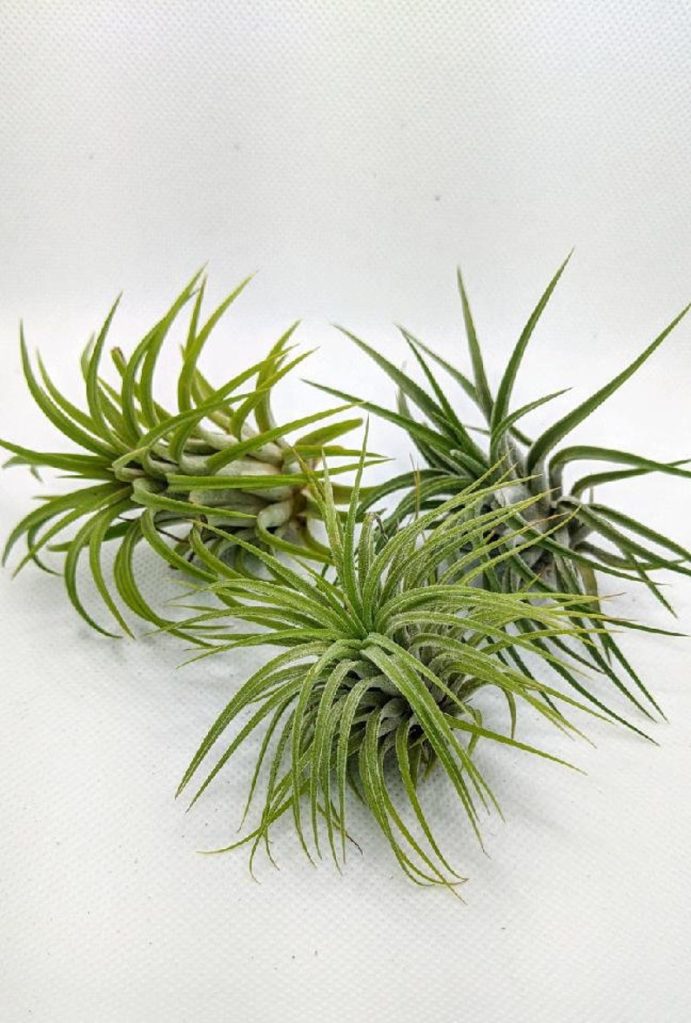
The Tillandsia plants or air plants have become widely popular in the modern home gardening scene. They have become home gardener’s favorite choice of plants. This is in thanks to their ease of care, ability to grow soil-less, and their creative displays.They are perfect for those who love the look of greenery in heir homed decor but don’t have too much time on their hands.
Not just that, this family of plants is huge. With over 650 different species such as the Medusae air plant that we are focusing on in this post.
The scientific name of the plant is Tillandsia Caput Medusae. That said, it’s also known as Medusa’s head, medusa plant or the octopus plant. This plant is native to Central America and Mexico, where they grow on tree branches located in areas of strong sun. This fuzzy looking Tillandsia is silvery green in color with hues of purple throughout the base extending up towards the leaves. The Tillandsia caput medusae are xeric air plants which means that they can handle more direct sunlight and less water than other air plant varieties. Fun fact: these fascinating plants are ageotropic, which means that they will grow straight even when mounted horizontally or upside down. They do not turn or grow in response to gravity as many plants do.
The plant is a flowering plant that blooms in early summer when growing in its natural habitat. When cultivated, its flowering period is usually in spring to early summer. The vibrant violet-pink flowers are about 3.2 centimeters long. They arise from red inflorescences that are digitate and unbranched. They also produce pups or offsets after blooming.
Medusae Care
Tillandsia Caput Medusae plants are very easy to care for like other species of this family. They will not need you to take follow any complicated or lengthy care routines. Here are some of the requirements for this striking plant.
Water
The Medusa plant doesn’t need too much water. Unlike other air plants, it doesn’t even prefer to be soaked in water. You should use misting or spraying to water this plant. Mist it 2-3 times during summers and focus on the head of the plant rather than the bulbous base. There is good chance water will get trapped in the base of the plant, so you should allow the plant to dry completely.
If you do soak them, keep the soak short (say 10-15 minutes) and make sure to turn the plant upside down and shake it. During winters, you can reduce the misting to once a week or adjust the frequency if you feel like the plant is starting to wilt. If the leaves of the Medusa plant begin to curl, this indicates that the plant requires water.
Light
This plant prefers bright light with some shade. If you provide it with some morning and evening sun but not direct or against a shade, it works well. Putting it near a north-facing window that’s curtained is the ideal location for the Medusa plant.
Tillandsia Caput Medusae is an eye-catching sight with its leaves twirling in an extraordinary fashion. With a little care and attention that this plant demands, it can add uniqueness to your indoor locations, whether on a bookshelf or an end table. Do you want to add a Tillandsia caput medusae to your plant collection? Check out our shop link to grab one today:
We’re just inviting you to take a timeout into the rhythmic ambiance of our breakfast, brunch and/or coffee selections. We are happy whenever you stop by.