
There’s something timeless about lavender—the soft purple blooms, the calming scent, the way it hums with bees on a warm afternoon. And if you’ve ever thought about adding it to your garden, a lavender hedge might just be one of the most rewarding (and low-maintenance) choices you can make.
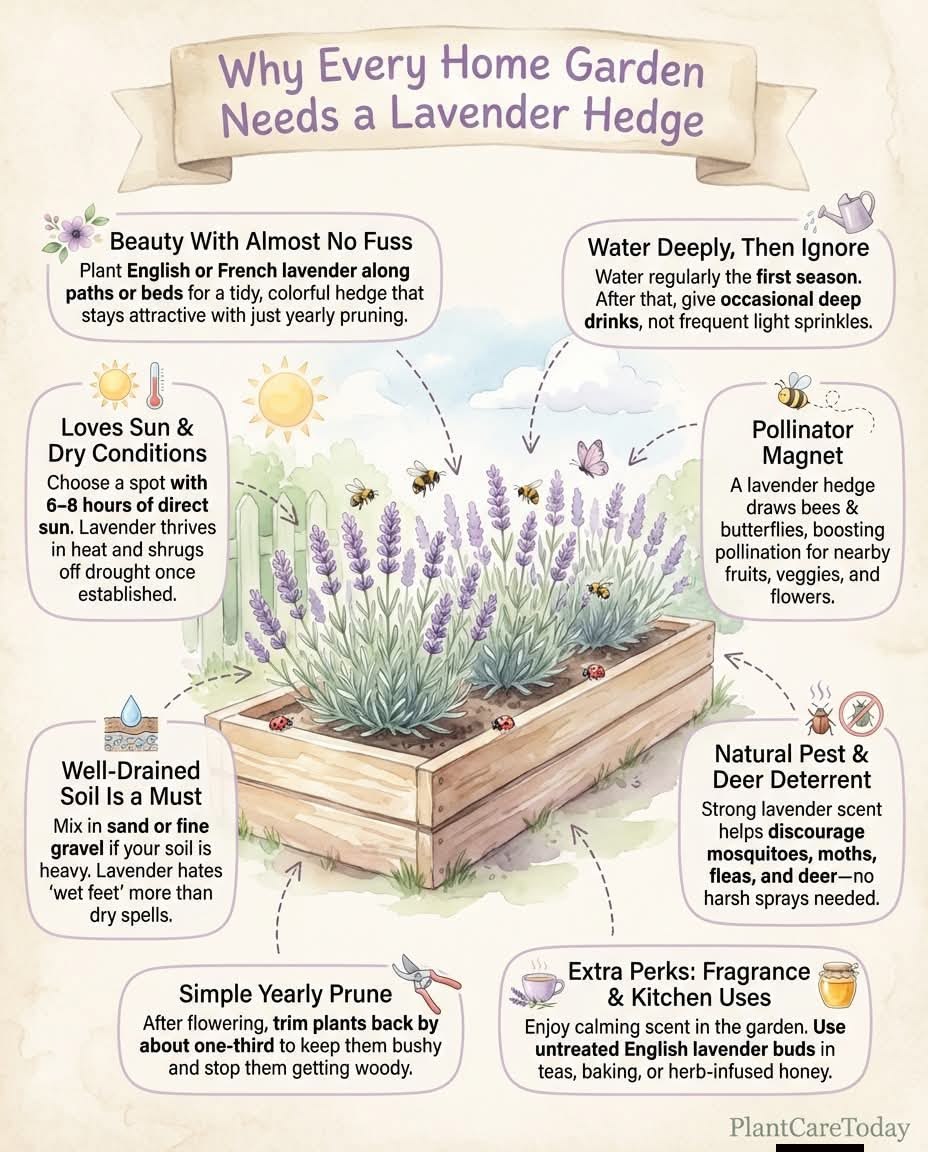
Let’s dig into how to plant it, care for it, and truly enjoy everything this beautiful plant has to offer—pulling inspiration straight from the garden wisdom in your image.
Lavender isn’t just pretty—it’s practical.
A simple row of lavender along a walkway or garden bed creates a neat, colorful border that stays attractive with very little effort. Once established, it becomes one of those plants that quietly thrives in the background while doing a lot of good work for your garden.
From attracting pollinators to naturally deterring pests, lavender earns its place.
🌱 How to Plant Lavender
☀️ Choose the Right Spot
Lavender loves sunshine—no negotiating here.
Aim for 6–8 hours of direct sun daily. The more sun, the better the blooms and fragrance.
🌾 Soil Matters (A Lot!)
This is where most people go wrong.
Lavender hates wet feet. If your soil is heavy or clay-like, mix in:
- Sand
- Fine gravel
This improves drainage and keeps roots healthy. Raised beds (like in your image!) are perfect for lavender because they naturally prevent soggy soil.
🌼 Spacing for a Hedge Look
Plant lavender about 12–18 inches apart depending on the variety.
They’ll grow together into that soft, full hedge look over time.
💧 Watering: Less Is More
Lavender has a “tough love” approach to watering.
- First season: Water regularly while it establishes roots
- After that: Only give deep, occasional watering
Skip frequent light watering—it actually weakens the plant. Think of it as teaching your lavender to be drought-tolerant (because it absolutely can be).
✂️ Pruning for Healthy Growth
One simple habit makes all the difference:
After flowering, trim back about one-third of the plant.
This keeps your lavender:
- Full and bushy
- From turning woody
- Blooming beautifully year after year
It’s a quick seasonal task with big rewards.
🐝 A Pollinator’s Paradise
One of the sweetest perks—literally.
Lavender is a magnet for:
- Bees
- Butterflies
- Other helpful pollinators
Planting a hedge near your veggie or flower garden can boost pollination, helping everything around it thrive.
🌿 Natural Pest Protection
That strong, soothing scent we love?
Pests… not so much.
Lavender naturally helps discourage mosquitoes, moths, fleas, and even deer, making it a gentle, chemical-free way to protect your garden space.
🍯 Bonus: Fragrance & Kitchen Uses
Lavender doesn’t just stay in the garden—it comes inside too.
Use untreated English lavender buds for:
- Teas
- Baking (lavender cookies are a dream)
- Infused honey
And of course, just brushing past it in the garden releases that calming scent that makes everything feel a little more peaceful.
A lavender hedge is one of those rare garden features that checks all the boxes:
- Beautiful
- Useful
- Low maintenance
- Pollinator-friendly
Give it sun, well-drained soil, and a little space to grow—and it will reward you season after season with color, fragrance, and life.

