
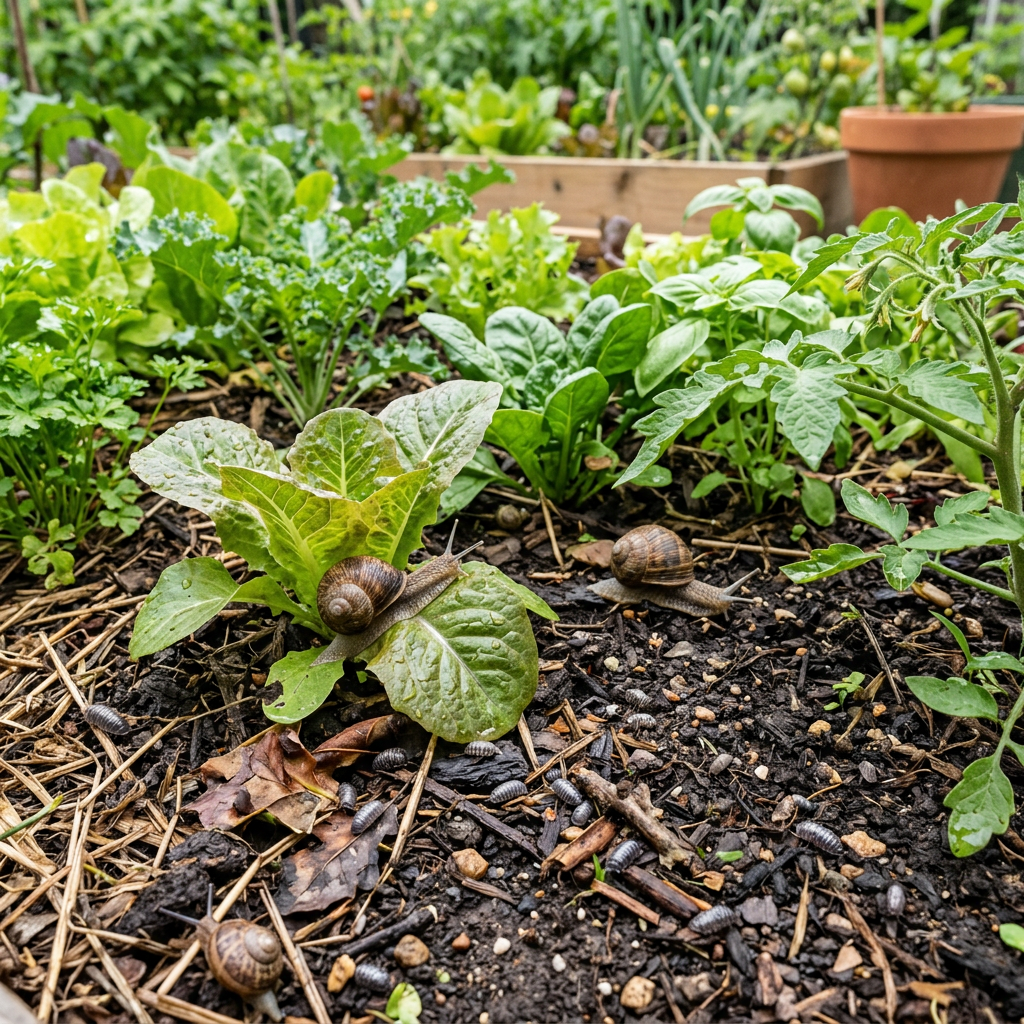
🐌 Know Your Garden Visitors First
Before you treat the problem, it helps to know who you’re dealing with:
- Pill bugs (roly-polies): Love damp, decaying matter but will munch tender seedlings when food is scarce
- Snails & slugs: Nighttime feeders that leave slimy trails and ragged holes
- Leaf-chewing insects: Caterpillars, beetles, and earwigs that snack on foliage and flowers
Once you know their habits, you can outsmart them.
🌱 1. Start with a Clean Garden
A tidy garden is your first line of defense.
- Remove decaying leaves, mulch piles, and debris
- Avoid overly thick mulch layers (a favorite hiding spot!)
- Space plants to improve airflow and reduce damp conditions
Pill bugs and snails thrive in moisture—so less clutter = fewer pests.
🌞 2. Water Smarter, Not Harder
Moisture is what draws many of these pests in.
- Water early in the morning, not evening
- Let the soil surface dry out between watering
- Use drip irrigation instead of overhead watering
This simple shift can drastically reduce slug and snail activity.
🪵 3. Trap & Relocate (Yes, Really!)
If you want a gentle, chemical-free approach, traps work wonders.
For pill bugs:
Place hollowed-out potato halves or damp cardboard in the garden
Check in the morning and relocate the bugs
For snails & slugs:
Bury a shallow dish filled with beer or yeast water They’re attracted, fall in, and can’t escape
Use Natural Barriers
Sometimes the best defense is a good “do not cross” line.


Try these around your plants:
- Crushed eggshells – sharp edges deter soft-bodied pests
- Diatomaceous earth – dehydrates insects (reapply after rain)
- Copper tape or rings – creates a mild reaction that repels slugs/snails
- Plant Pest-Repelling Companions
- Your garden can help protect itself.
- Marigolds – deter many insects
- Lavender & rosemary – strong scent confuses pests
- Nasturtiums – act as a “trap crop,” drawing pests away from veggies
- Mixing flowers into your veggie beds isn’t just pretty—it’s strategic.
- Try Gentle Organic Sprays
If damage is getting out of hand, a light spray can help.
Neem oil – disrupts feeding and life cycles
Garlic spray – natural repellent
Soapy water (mild) – works on soft-bodied insects
Use in the early morning or evening to avoid harming beneficial insects.
🌻 Final Thoughts
A few chewed leaves don’t mean failure—it just means your garden is part of a living ecosystem. The goal isn’t perfection… it’s balance.
With a mix of smart watering, natural barriers, and a little help from beneficial critters, you can protect your veggies and flowers without losing that beautiful, natural garden vibe you love.

