
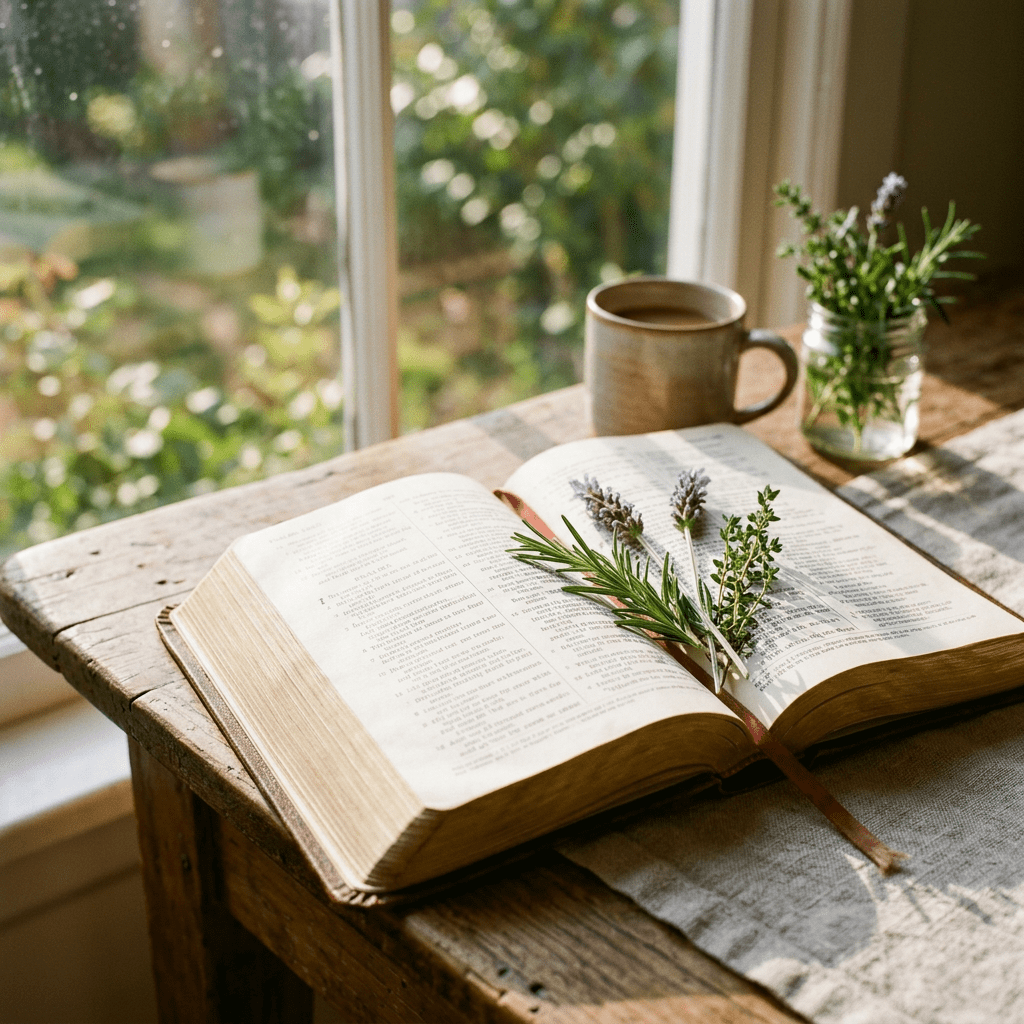
There’s something deeply comforting about knowing that some of the same herbs we grow in our gardens today were once gathered, touched, and used in biblical times. These plants weren’t just for flavor—they held meaning, purpose, and symbolism woven into everyday life and faith.
Creating a small “biblical herb garden” is more than just planting—it’s like growing a living story.
One of the most meaningful herbs mentioned throughout scripture is hyssop. It appears in both the Old and New Testaments and is closely tied to purification and cleansing. In Exodus, it was used during Passover, and in Psalms, it becomes a symbol of spiritual renewal: “Purge me with hyssop, and I shall be clean.” It’s a humble plant, yet it carries a powerful message of restoration.
In the New Testament, we see herbs like mint, dill, and cumin mentioned together. These were common kitchen herbs, part of daily life. Jesus referenced them when teaching about tithing—reminding people that while small details matter, they should never outweigh love, mercy, and faith. It’s a gentle nudge that even the smallest things we tend—like herbs in a garden—can hold meaning, but shouldn’t distract us from what truly matters.
Coriander shows up in a beautiful and descriptive way. It’s used to help explain what manna looked like as it fell from heaven to feed the Israelites. Imagine waking up and seeing something like coriander seed scattered across the ground—provision in its simplest, most natural form.
Then there are the deeply human moments tied to herbs and vegetables like garlic, onions, and leeks. These are mentioned when the Israelites, wandering in the wilderness, remembered the foods they once had in Egypt. It’s such a relatable moment—missing the familiar, even when moving toward something better.
One of the most beloved plant references is the mustard seed. Tiny and easily overlooked, yet it grows into something surprisingly strong and expansive. It becomes a symbol of faith—reminding us that even the smallest beginnings can flourish into something beautiful and sheltering.
And tucked into another teaching is rue, a lesser-known herb today, but once valued and used enough to be included in discussions of devotion and practice.
What stands out most is this: these weren’t rare or exotic plants. They were everyday herbs—grown close to home, used in cooking, healing, and rituals. They remind us that meaning often grows in the ordinary.
If you’re inspired to plant your own biblical herb garden, you don’t need much space. A few pots on a porch, a raised bed, or even a small corner of your yard can become a peaceful place to reflect, grow, and connect.
Plant mint for abundance, mustard for faith, and hyssop for renewal—and let your garden tell a story that’s been growing for generations.

