
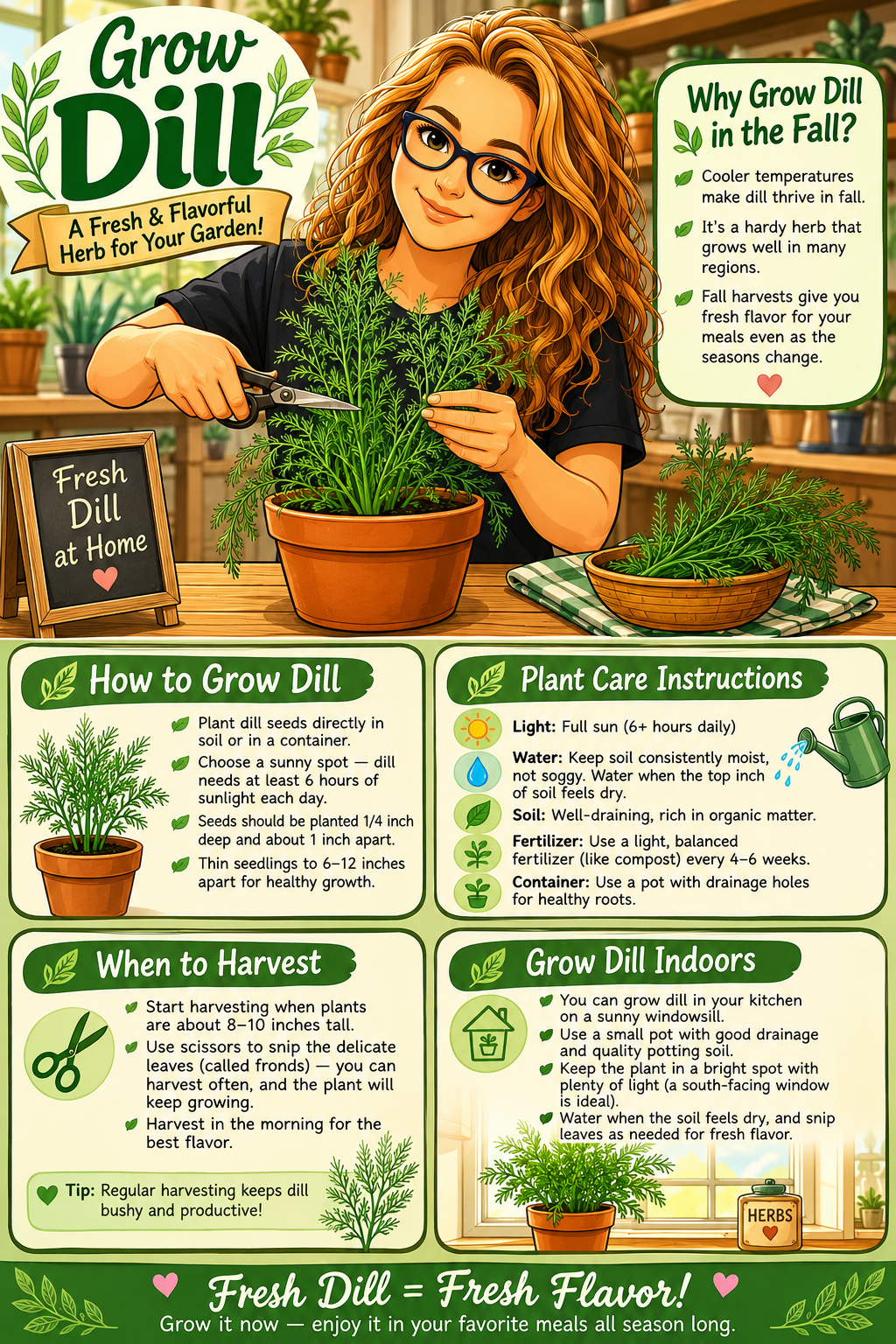
If you’re looking for an easy herb to add to your garden this fall, dill should definitely be on your list! With its feathery green leaves, fresh fragrance, and delicious flavor, dill is a wonderful herb for both the garden and the kitchen. And the best part? You can grow it in a container or even indoors on a sunny kitchen windowsill.
🌱 Why Grow Dill in the Fall?
Dill loves cooler temperatures and can struggle during the intense heat of summer. As the temperatures begin to cool, fall creates wonderful growing conditions for this herb.
Dill grows quickly, so you can enjoy fresh leaves in just a few weeks. It’s also a beautiful addition to the garden, producing delicate yellow flower clusters that attract beneficial pollinators.
Garden tip: Dill doesn’t love being transplanted because of its long taproot, so it’s best to direct-sow seeds where you want them to grow.
🪴 How to Grow Dill in a Container
Dill is perfect for container gardening!
Choose a container that is at least 12 inches deep with good drainage. Fill it with a quality potting mix and sprinkle your dill seeds lightly over the surface. Cover them with a thin layer of soil and keep the soil consistently moist while the seeds germinate.
Dill Care
☀️ Light: Give dill about 6–8 hours of sunlight each day. Fall’s bright sunshine is perfect.
💧 Water: Keep the soil lightly and consistently moist, but don’t leave the roots sitting in soggy soil.
🌱 Soil: Use loose, well-draining soil with some organic matter.
✂️ Pruning: Pinch or cut the growing tips regularly to encourage fresh growth and keep the plant from becoming too tall and floppy.
✂️ When Should You Harvest Dill?
You can begin harvesting dill once the plant has developed several sets of leaves.
For the best flavor, harvest the young, leafy stems before the plant flowers. Simply snip what you need with clean scissors, leaving plenty of the plant behind so it can continue growing.
Want dill seeds? Let the yellow flowers develop. Once the flower heads begin to turn brown and dry, you can collect the seeds for cooking or save them to plant another crop.
🌿 Harvest little and often: Regular cutting encourages your dill plant to produce more fresh foliage.
🏡 Growing Dill Inside Your Kitchen
Don’t have a garden? No problem! Dill can grow indoors in a sunny kitchen.
Place your container near a bright, sunny window, preferably one that receives several hours of direct sunlight. If your kitchen doesn’t get enough natural light, a small grow light can help keep the plant healthy and compact.
Because indoor dill has less airflow and light than outdoor plants, be careful not to overwater. Let the surface of the soil dry slightly between waterings.
And there’s something pretty wonderful about being able to reach over while you’re cooking and snip a little fresh dill straight from the windowsill. 🌿🍳
🥒 Ways to Use Fresh Dill
Dill isn’t just for pickles! Try adding fresh dill to:
- Potato salad
- Cucumber salads
- Roasted vegetables
- Homemade dips and sauces
- Soups
- Eggs
- Fish and seafood
- Buttered potatoes
- Homemade pickles
The delicate leaves have a fresh, slightly grassy flavor that can brighten up so many dishes.
🌿 A Little Dill-Growing Challenge
This fall, try planting a small container of dill near your kitchen door—or right on your sunny windowsill. Plant a few seeds every couple of weeks for a continuous supply of fresh dill instead of planting everything at once.
There’s something so satisfying about growing an herb from a tiny seed and eventually walking into the kitchen with a handful of fresh greens for dinner. 🌱💚
Have you grown dill before? Do you use it more for cooking, pickling, or simply enjoying it in the garden?

