Drying herbs is one of the easiest ways to preserve your harvest. You don’t need fancy equipment, and once your herbs are completely dry, they can be stored in airtight jars and used throughout the year for cooking, teas, homemade seasoning blends, and more.
Whether you’re growing basil on the patio, rosemary in the garden, or chamomile for a relaxing cup of tea, here’s a simple guide to drying herbs at home.
🌱 When Is the Best Time to Harvest Herbs?
For the best flavor and aroma, harvest herbs in the morning after the dew has dried but before the heat of the day becomes intense.
For leafy herbs such as basil, mint, lemon balm, oregano, and parsley, harvest stems before the plants begin flowering when possible. The leaves generally have their strongest flavor at this stage.
For flowering herbs such as lavender and chamomile, harvest when the flowers are at their best and have opened sufficiently.
A few harvesting tips:
- Use clean, sharp scissors or garden snips.
- Choose healthy stems and leaves without insects, disease, or damage.
- Avoid harvesting wet herbs whenever possible.
- Don’t remove more than about one-third of the plant at a time so it can continue growing.
🌿 Preparing Herbs for Drying
Before drying, gently inspect your harvest and remove damaged or discolored leaves.
If your herbs are clean, it’s often best not to wash them, because extra moisture can make drying take longer. If they do need washing, rinse them gently and pat them thoroughly dry with a clean towel.
Remove excess leaves from the lower portion of stems if you plan to hang the herbs in bundles.
Now you’re ready to choose your drying method!
Method 1: Air-Drying Herbs
Air-drying is my favorite old-fashioned method because it’s simple, inexpensive, and requires very little equipment.
It works especially well for herbs with lower moisture content such as:
- Rosemary
- Thyme
- Oregano
- Sage
- Lavender
How to air-dry herbs:
1. Gather small bundles.
Tie several stems together with twine or a rubber band. Keep the bundles relatively small so air can circulate around the herbs.
2. Hang them upside down.
Choose a dry, dark, well-ventilated location away from direct sunlight.
A pantry, spare room, covered porch, or other dry area can work well.
3. Give them time.
Depending on the herb and your home’s humidity, drying can take anywhere from several days to two weeks.
4. Check for dryness.
Your herbs are ready when the leaves feel crisp and crumble easily between your fingers. Stems should snap rather than bend.
🌿 Air-Drying Tip
Don’t make your bundles too large. A thick bundle can trap moisture in the center and encourage mold. Smaller bundles with plenty of airflow are much safer.
Method 2: Oven-Drying Herbs
If you want your herbs dried more quickly, the oven can help.
The key is LOW heat. Herbs can lose their delicate flavor, color, and aroma if exposed to excessive heat.
How to oven-dry herbs:
- Preheat your oven to its lowest possible temperature, ideally around 95–120°F (35–50°C).
- Remove the leaves from thick stems if appropriate.
- Spread the herbs in a single layer on a baking sheet.
- Place the tray in the oven.
- Keep the oven door slightly open if your oven and household setup safely allow it, helping moisture escape.
- Check the herbs frequently and gently turn them if needed.
- Remove them when they are completely dry and crisp.
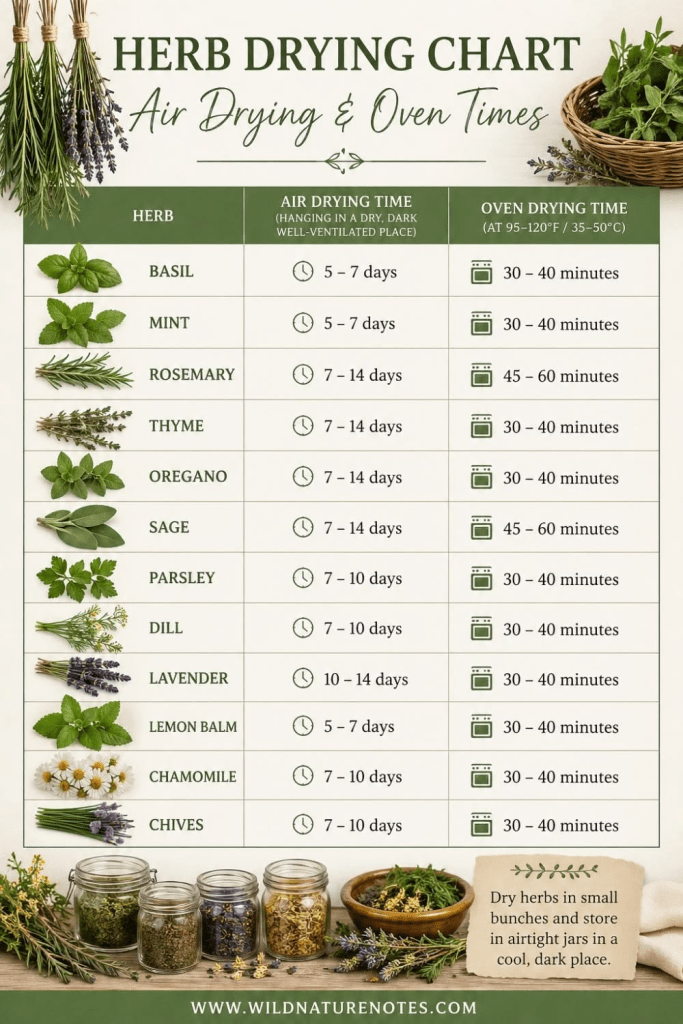
Drying times vary considerably depending on the herb, moisture level, oven, and humidity. The chart in the image gives approximate starting points, but always use dryness—not the clock—as your final test.
For example, basil and mint may dry relatively quickly, while thicker herbs such as rosemary and sage can take longer.
🌿 Don’t Forget About Flowers!
Drying isn’t just for culinary herbs.
You can also preserve herbs and flowers such as:
Lavender: Perfect for sachets, crafts, and homemade potpourri.
Chamomile: Dry the flowers for herbal tea or decorative projects.
Lemon balm: A fragrant herb that can be dried for teas and culinary uses.
Dill: Dry the leaves and seeds for cooking.
🌸 How Do You Know When Herbs Are Completely Dry?
This is one of the most important steps!
Herbs need to be completely dry before storing. Any remaining moisture can lead to mold or spoilage.
Try the crumble test:
Take a dried leaf and gently crush it between your fingers.
If it crumbles easily and feels crisp, it is ready.
If it feels soft, leathery, cool, or bends without breaking, it needs more drying time.
For flowers, the petals should feel dry and papery rather than soft or moist.
🫙 How to Store Dried Herbs
Once your herbs are completely dry, remove the leaves from their stems and gently crumble them.
Avoid pulverizing them into a fine powder unless a recipe specifically calls for it. Keeping the leaves slightly larger helps preserve their aroma and flavor.
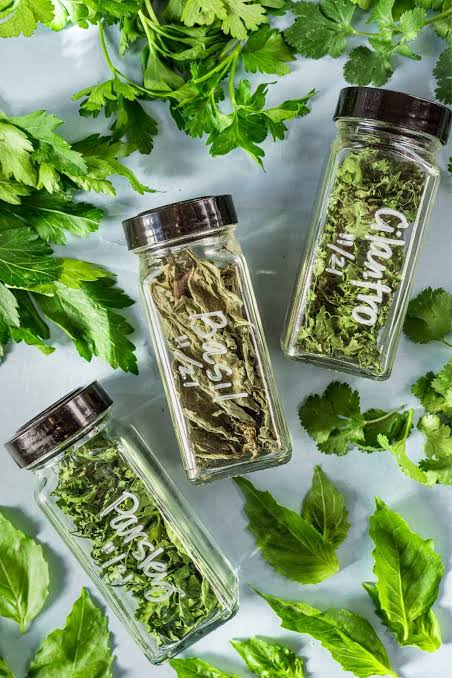
Place the dried herbs into clean, completely dry, airtight glass jars.
Label each jar with:
- The name of the herb
- The date it was dried
Store the jars in a cool, dark, dry place, such as a pantry or cupboard.
Avoid storing dried herbs above the stove or in direct sunlight, where heat and light can cause their flavor and color to fade.
🌿 Your Herb Drying Cheat Sheet
Here are approximate drying times from the chart:
| Herb | Air-Drying | Oven-Drying |
|---|---|---|
| Basil | 5–7 days | 30–40 minutes |
| Mint | 5–7 days | 30–40 minutes |
| Rosemary | 7–14 days | 45–60 minutes |
| Thyme | 7–14 days | 30–40 minutes |
| Oregano | 7–14 days | 30–40 minutes |
| Sage | 7–14 days | 45–60 minutes |
| Parsley | 7–10 days | 30–40 minutes |
| Dill | 7–10 days | 30–40 minutes |
| Lavender | 10–14 days | 30–40 minutes |
| Lemon Balm | 5–7 days | 30–40 minutes |
| Chamomile | 7–10 days | 30–40 minutes |
| Chives | 7–10 days | 30–40 minutes |
Remember: These are approximate ranges, not guarantees. Humidity, herb thickness, airflow, and your oven all affect drying time.
🍃 A Few More Herb-Drying Tips
Don’t rush the process.
Low and slow is better than using high heat.
Keep herbs out of direct sunlight.
Sunlight can fade their beautiful green color and reduce their aromatic quality.
Give them plenty of airflow.
Good ventilation is especially important when air-drying.
Check for moisture before storing.
One slightly damp batch can spoil an entire jar.
Don’t forget your labels!
A jar of dried green leaves can become surprisingly difficult to identify six months later. Trust me—your future self will appreciate the label!
🌻 Bring Your Garden Into Every Season
One of the best things about growing herbs is that the harvest doesn’t have to end when summer does.
By drying your herbs, you can capture a little piece of your garden and bring it into your kitchen throughout the year. Imagine opening a jar of dried rosemary in winter and getting that wonderful garden-fresh aroma—or brewing a cup of chamomile tea from flowers you harvested yourself.
It’s simple, inexpensive, and wonderfully rewarding.