
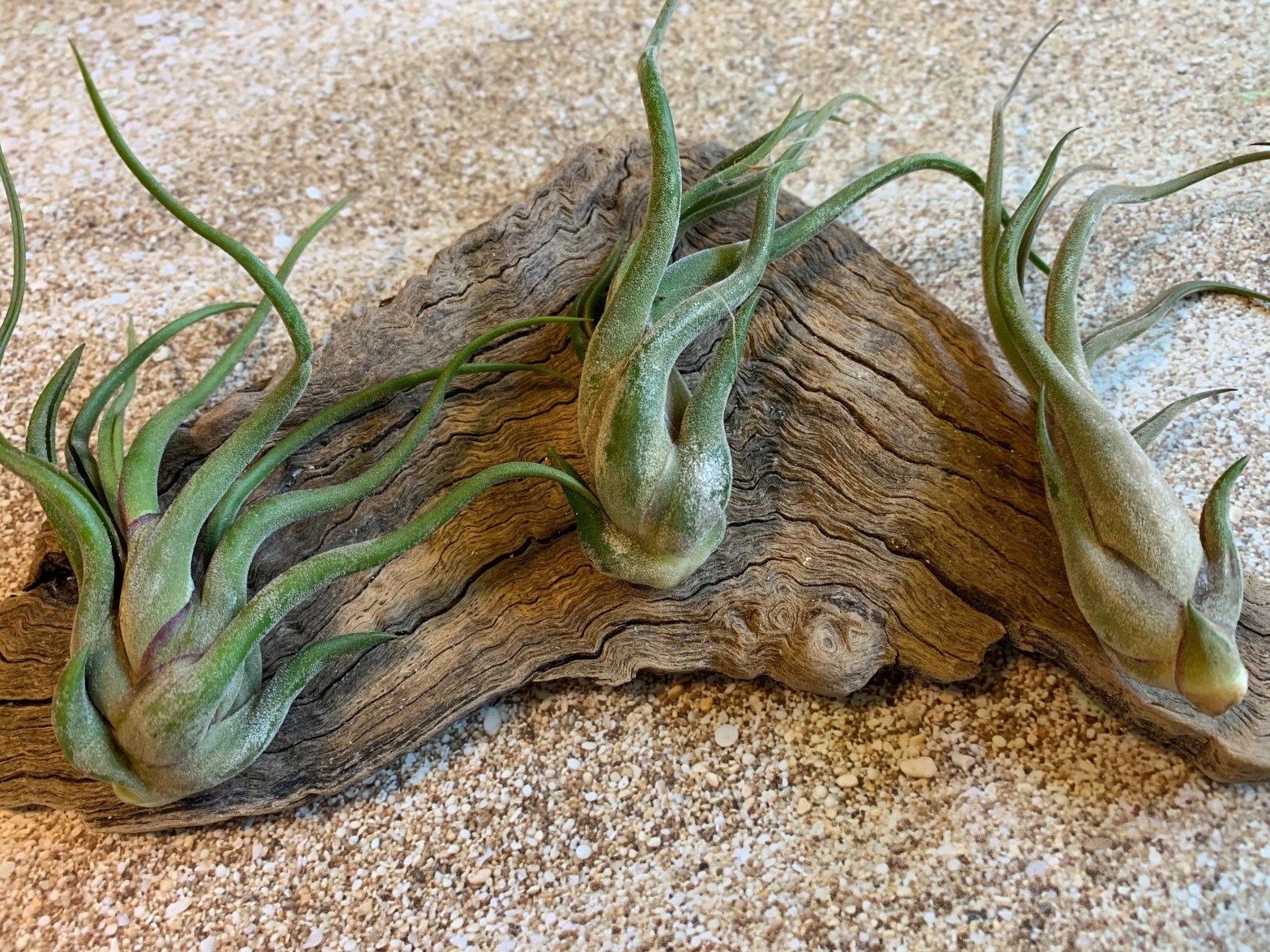
If you love unusual plants, the Medusa Air Plant is one you’ll definitely want to add to your collection!
Known scientifically as Tillandsia caput-medusae, this unique air plant gets its name from its long, twisting leaves that resemble the snake-like hair of Medusa from Greek mythology. Its silvery-green leaves grow from a rounded, bulb-like base, giving it a wonderfully wild and sculptural appearance.
And the best part? It doesn’t need soil! Like other Tillandsia, the Medusa Air Plant is an epiphyte, meaning it naturally grows attached to other surfaces rather than rooted in soil.
🌎 Where Does the Medusa Air Plant Grow in the Wild?
Tillandsia caput-medusae is native to Mexico and Central America, with its natural range extending through countries including Guatemala, Honduras, El Salvador, Nicaragua, Costa Rica, Panama, and parts of Mexico.
In its natural habitat, you’ll find this little beauty growing as an epiphyte on tree branches, rocks, and other surfaces. It is particularly adapted to seasonally dry tropical environments, where it receives moisture from rain, humidity, mist, and dew rather than from soil.
That natural lifestyle gives us a big clue about how to care for it at home: good air circulation, bright light, and careful watering are key.
☀️ Medusa Air Plant Light Requirements
Your Medusa Air Plant will be happiest in bright, indirect light.
A spot near an east- or west-facing window can work beautifully. A bright south-facing window can also work if the plant is protected from harsh afternoon sun.
Think of it this way:
🌞 Bright filtered light = happy Medusa
🔥 Intense hot afternoon sun through glass = potentially unhappy Medusa
If you’re growing yours somewhere that doesn’t receive enough natural light, a grow light can also be used.
Good lighting is especially important if you want to encourage healthy growth and eventually enjoy its beautiful bloom.
💧 How to Water a Medusa Air Plant
Here’s where the Medusa is a little different from some other air plants.
Its unusual bulbous base and tightly curled leaves can allow water to become trapped, so drying thoroughly after watering is extremely important.
My preferred watering routine:
1. Soak the plant.
Place your Medusa in room-temperature water for about 15–30 minutes.
2. Give it a good shake.
After its bath, gently shake the plant to remove excess water.
3. Turn it upside down to dry.
Place it somewhere with good air circulation and allow it to dry completely before returning it to its display.
4. Never leave water sitting inside the bulbous base.
Depending on the temperature, humidity, and airflow in your home, you may need to adjust how often you water. A dry indoor environment may require more frequent watering, while a humid environment may require less.
The important thing isn’t following a strict calendar—watch your plant!
If the leaves begin looking excessively dry, curled, or crispy, it may need more hydration. If the base becomes soft or mushy, that’s a warning that moisture may be lingering where it shouldn’t.
🌬️ Airflow Is Just as Important as Water
One of the biggest mistakes people make with air plants is thinking that because they’re called “air plants,” they only need air and an occasional mist.
Not quite!
They still need regular hydration, but they also need to dry out afterward.
Good airflow helps the plant dry quickly and reduces the chance of rot. Open displays such as driftwood, cork, wire holders, or decorative stands are excellent choices because they allow air to move around the entire plant.
Avoid placing your Medusa in a deep container where water can collect around the base.
🌸 Will a Medusa Air Plant Bloom?
Yes!
When mature and happy, Tillandsia caput-medusae can produce a colorful flower spike with beautiful violet or purple flowers. After flowering, the plant can produce pups, giving you the opportunity to grow your little air plant family.
And honestly, watching an air plant go from a quirky little green sculpture to a blooming beauty is one of the joys of growing Tillandsia.
🌿 Quick Medusa Air Plant Care Guide
Plant: Tillandsia caput-medusae
Common name: Medusa Air Plant / Medusa’s Head
Soil: None!
Light: Bright, indirect light
Water: Soak for about 15–30 minutes as needed
After watering: Shake out excess water and allow to dry completely
Airflow: Excellent airflow is essential
Temperature: Keep warm and protect from freezing
Display: Driftwood, cork, shells, air plant holders, or an open decorative container
Native range: Mexico and Central America
🐍 Add a Little Medusa Magic to Your Plant Collection
There is something wonderfully whimsical about the Medusa Air Plant. With its twisting, snake-like leaves and unusual shape, it looks almost like a tiny piece of living sculpture.
It makes a beautiful addition to a plant shelf, bathroom, office, terrarium-style display, or botanical arrangement—and because it doesn’t need soil, there are so many creative ways to display it!
🌿 Want to add one to your collection?
You can find Medusa Air Plants in my shop, where I love bringing unique air plants and nature-inspired garden treasures to fellow plant lovers.
So if you’re looking for an air plant that’s a little unusual, a little wild, and absolutely full of personality, give Medusa (Tillandsia caput-medusae) a spot in your home.
Just remember its three little rules:
Bright light.
Good hydration.
And let that Medusa dry!
 The-Dirty-Hoe.com