
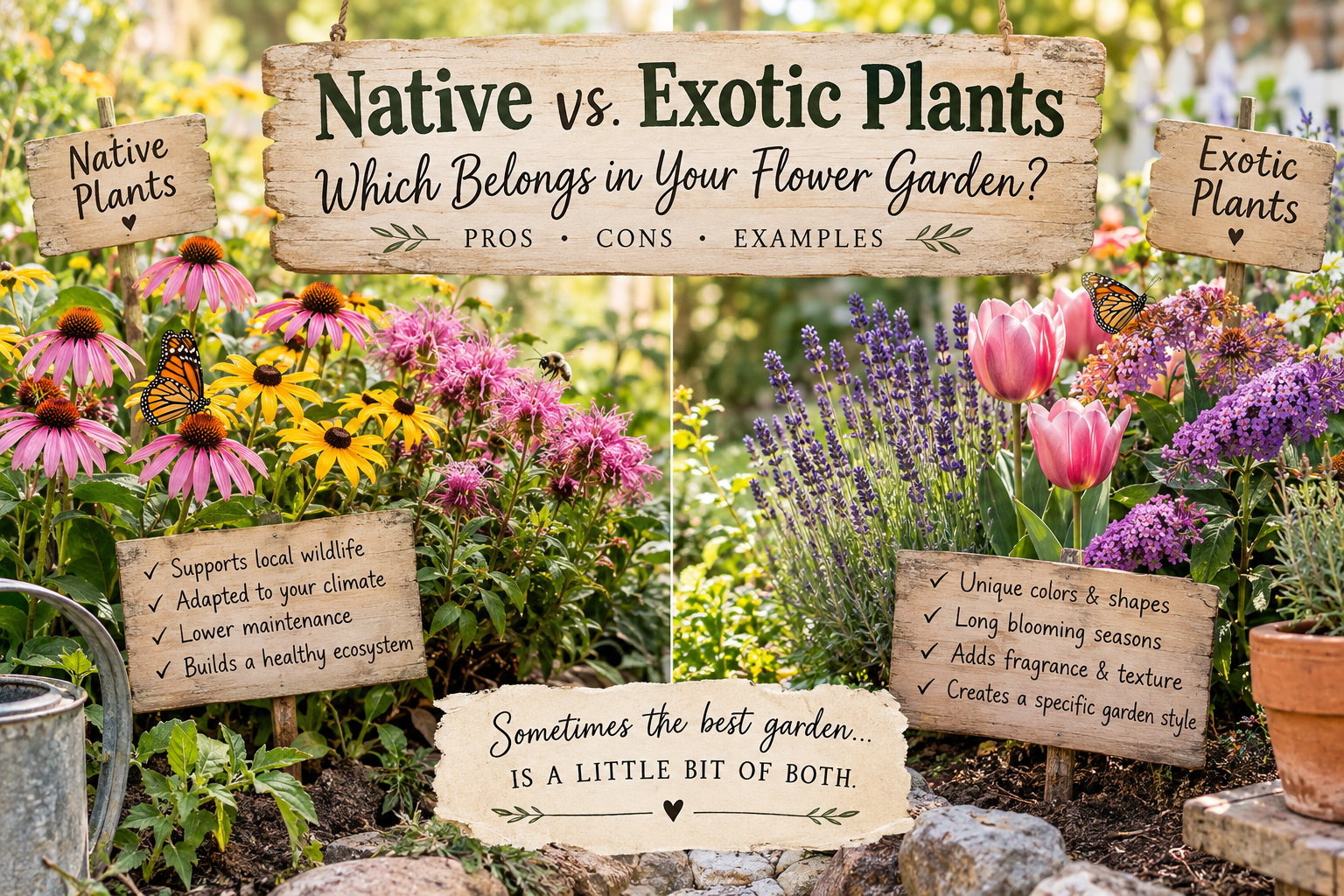
When planning a flower garden, we often choose plants based on color, bloom time, fragrance, or simply because we fell in love with them at the garden center. But there is another question worth asking:
Should you plant native flowers, exotic plants—or a little of both?
Native and exotic plants can both create beautiful garden beds, but they have very different relationships with the environment around them. Understanding the pros and cons can help you create a garden that is not only beautiful but also beneficial to your local wildlife.
🌿 What Is a Native Plant?
A native plant is a plant that naturally occurs in a particular region or ecosystem. These plants have evolved alongside the insects, birds, wildlife, soil, and climate of that area.
For example, depending on where you live, native plants might include:
1. Purple Coneflower (Echinacea purpurea)
This beautiful perennial produces daisy-like purple flowers and is a favorite of bees and butterflies. Its seed heads can also provide food for birds.
Pros:
- Attracts pollinators
- Generally adapted to local conditions
- Provides food and habitat for wildlife
- Low-maintenance once established
Con:
- It may spread more than expected in a small garden bed.
2. Black-Eyed Susan (Rudbeckia hirta)
With cheerful golden petals surrounding a dark center, Black-Eyed Susan brings a splash of summer color to the garden.
Pros:
- Tough and adaptable
- Attracts bees and butterflies
- Provides seeds for birds
- Often easy to grow from seed
Con:
- It can self-seed and pop up in places where you didn’t originally plant it.
3. Bee Balm (Monarda fistulosa)
Bee balm produces beautiful clusters of flowers and is especially attractive to bees, butterflies, and hummingbirds.
Pros:
- Excellent pollinator plant
- Adds height and color
- Great for attracting hummingbirds
- Works beautifully in a cottage garden
Con:
- It can spread quickly and may need occasional dividing or thinning.
🌺 What Is an Exotic Plant?
An exotic plant is a plant growing outside of its natural geographic range. Gardeners often introduce exotic plants because they offer unusual colors, shapes, fragrances, or growing habits.
And let’s be honest—some of those exotic flowers are just too pretty to resist!
Three popular examples include:
1. Lavender (Lavandula angustifolia)
Lavender is beloved for its fragrant purple flowers and silvery foliage.
Pros:
- Wonderful fragrance
- Attractive to many pollinators
- Beautiful in borders and containers
- Drought-tolerant once established
Cons:
- Can struggle in areas with high humidity or poorly draining soil
- May require more attention to growing conditions than a well-adapted native plant.
2. Butterfly Bush (Buddleja davidii)
Butterfly bush produces long clusters of flowers that can attract butterflies throughout the growing season.
Pros:
- Beautiful, long-lasting flowers
- Attractive to butterflies
- Fast-growing
- Makes a dramatic addition to a flower bed
Cons:
- It can become invasive in some regions
- It does not provide the same ecological value as native host plants for many butterfly species.
3. Tulips (Tulipa species)
Tulips bring some of the most spectacular spring color to the garden, with flowers available in nearly every shade imaginable.
Pros:
- Huge variety of colors and shapes
- Excellent for creating spring displays
- Easy to incorporate into flower beds and containers
- Provides early-season color
Cons:
- Many varieties don’t reliably return year after year in warmer climates
- Bulbs may require special care or replacement.
🌱 The Pros of Planting Native Plants
Native plants can be little powerhouses in the garden.
Because they evolved in your region, they are often better suited to the local climate, soil, and growing conditions. Once established, many natives require less watering and maintenance than plants that aren’t adapted to your area.
They can also play an important role in supporting wildlife.
Native plants can provide:
🌼 Nectar for pollinators
🐛 Food for caterpillars
🐦 Seeds for birds
🦋 Habitat for butterflies
🐝 Resources for native bees
One of the biggest advantages is that native plants aren’t simply pretty—they can become part of the local ecosystem.
🌸 The Cons of Native Plants
Native doesn’t automatically mean “perfect.”
Some native plants can spread aggressively, become large, or look less tidy than the highly cultivated plants we see in traditional flower beds.
You may also have fewer choices if you’re looking for a very specific flower color, bloom shape, or garden style.
And remember: a plant being native to your state doesn’t necessarily mean it is native to your exact area. Local growing conditions matter.
🌺 The Pros of Exotic Plants
Exotic plants can bring something special to a garden.
Gardeners have access to thousands of plants from around the world, giving us incredible choices when designing flower beds.
Exotic plants can provide:
🌷 Unique colors
🌸 Interesting flower shapes
🌿 Different foliage textures
🌺 Long blooming seasons
💜 Fragrance and ornamental appeal
They can also help create a particular garden style. Want a Mediterranean-inspired garden? Lavender and rosemary can help create that look. Want a colorful spring garden? Tulips and other bulbs can provide an incredible display.
⚠️ The Cons of Exotic Plants
The biggest concern with exotic plants is invasiveness.
Not every exotic plant is invasive, but some introduced plants can spread beyond gardens and compete with native species.
Before planting an exotic species, check whether it is considered invasive in your area.
Another consideration is wildlife value. A plant may be covered with beautiful flowers and attract a few pollinators, but that doesn’t necessarily mean it provides the same food and habitat that local native plants provide.
🌿 So, Should You Choose Native or Exotic?
My answer?
Why not both?
A garden doesn’t have to be 100% native or 100% exotic to be successful.
You can create a beautiful flower bed by using native plants as the foundation and adding carefully selected ornamental plants for extra color, fragrance, and interest.
For example, imagine a garden bed with native coneflowers and bee balm surrounded by beautiful lavender and spring tulips.
You get:
🌼 Native plants supporting local wildlife
🌷 Exotic plants adding unique beauty
🐝 Flowers blooming throughout multiple seasons
🦋 A garden filled with color and life
The important thing is to choose exotic plants responsibly and avoid species known to be invasive in your area.
🌻 The Best Garden Is One That Works With Nature
When deciding what to plant, don’t just ask, “Is this flower pretty?”
Ask:
Will it thrive here?
Will it support wildlife?
Does it fit my soil and climate?
Could it become invasive?
How much maintenance will it require?
A thoughtfully planted garden can be both an artistic expression and a small piece of habitat.
And perhaps that’s the best part of gardening—we don’t have to choose between a garden that is beautiful and one that benefits nature.
With the right plants, we can have both. 🌿🌸🦋

