Candied rose petals Or mint leaves

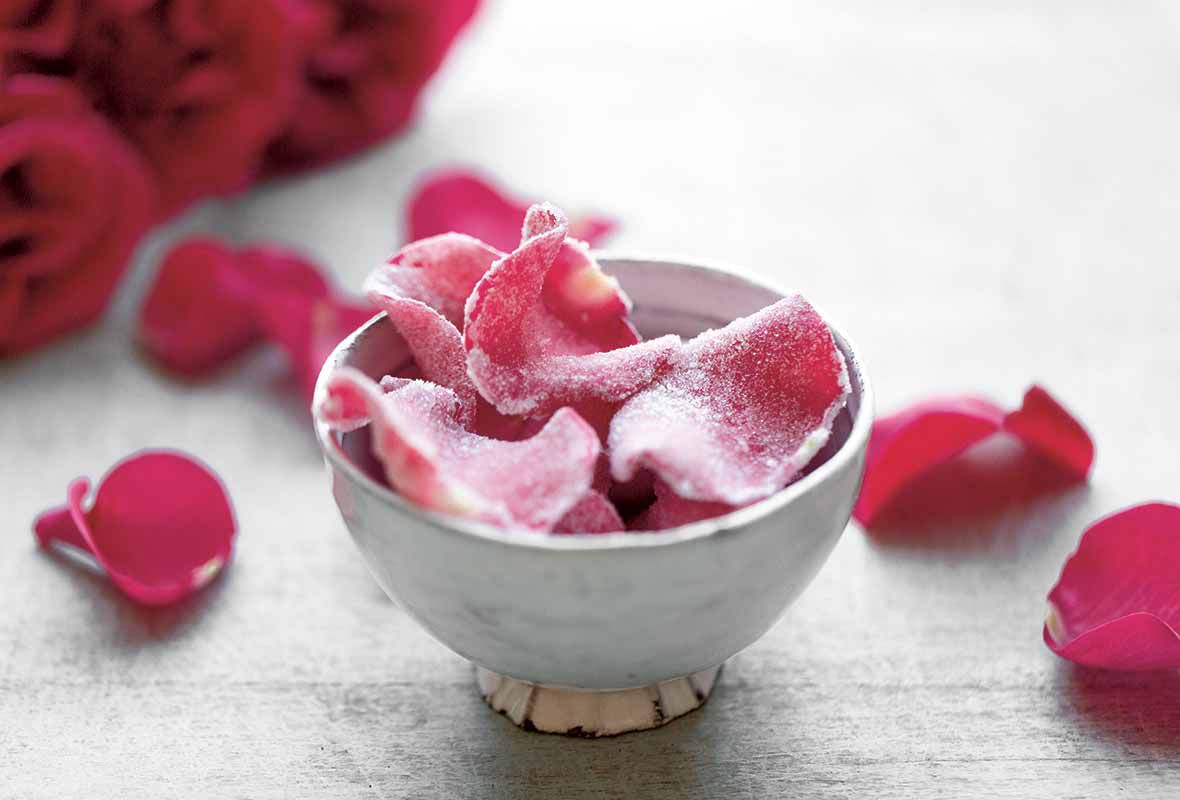
Try a different twist on candy this Valentine’s Day. Why not mix flowers with candy to create a unique treat! It is important to taste the rose petals you plan to use, as not all roses have a sweet flavor. Give them the smell and taste tests. Chances are if you like the fragrance, you’ll enjoy the flavor. Pull a petal from the rose and enjoy, but avoid the white area at the base of the petal as it is generally slightly bitter.If you see roses in your grocery store, bring them home and put them in a vase,  do not eat them. … Most flowers that come from the grocery store or from the florist have been sprayed with pesticides, fungicides and preservatives. So where do you find rose petals to eat? 

You can look at your local bakery, or you can find them on Amazon or even grow your own roses. Damask roses (Rosa damascena) and Apothecary rose (Rosa gallica). The white beach rose (Rosa rugosa alba) may be the most delicious edible rose petal. 

So after you get your rose petals you can make about 50 candied petals.

You need: 1 egg white

1 tsp water

Sugar

50 rose petals

In a bowl mix together egg white and water until foam appears. Select a pan large enough to hold the petals in a single layer. Brush the sugar on both sides of the petals and then dip the petal into the egg wash.  Place petals on the pan and let dry in room temp for 1-3 hours. Then enjoy! You can store in a tight container for up to 2 weeks.

You can also try mint leaves instead by following the same process. You can use the mint leaves from the grocery store or grow your own mint this spring!

Blossoming hope

Creating a flower hanging arrangement with spring blossoms can inspire memories and helpful reminders that even the harshest winter will end with a natural birth of spring. 

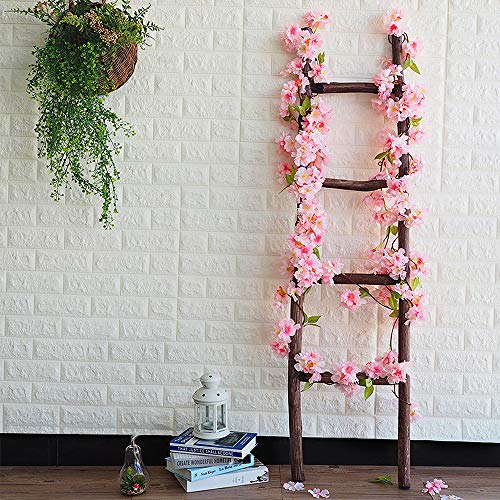
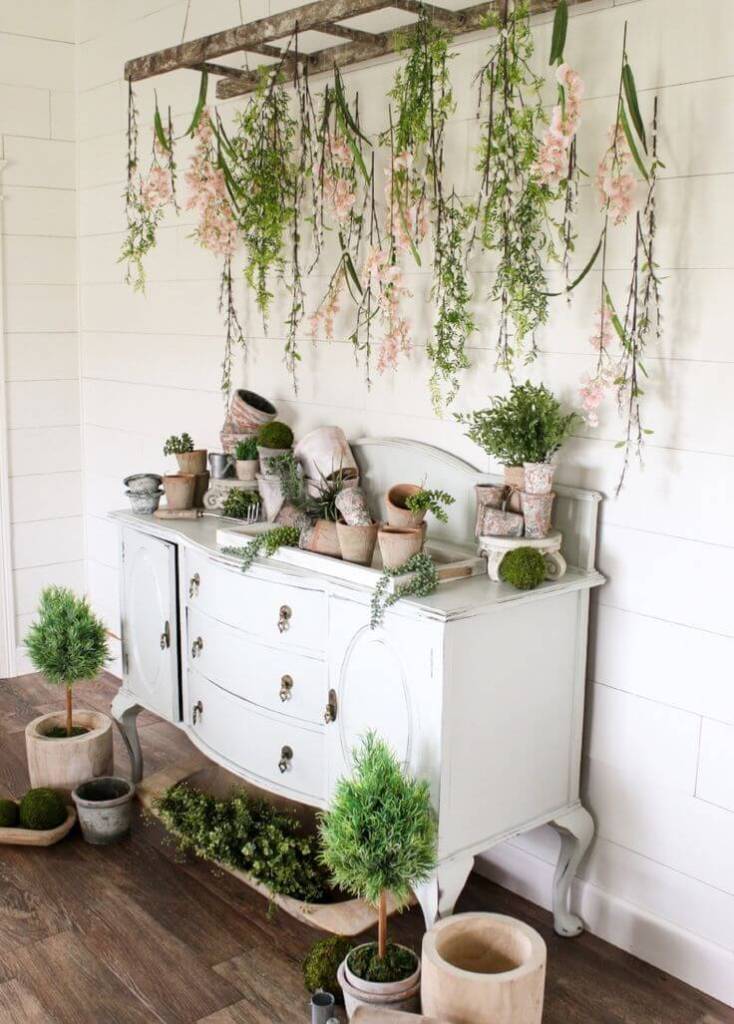
Japanese blossoms represent the fragility and beauty of life. For this arrangement let’s create the flowers to be the only focal point, by not adding any other foliage. You can use a sturdy metal frame, a piece of a ladder, or even use the chandelier as your base frame for the flowers. 

The final result is quiet simplicity with a fairy beauty. A joyful celebration of the fleeting beauty of nature is a  reminder of the cyclical rhythm of the seasons, the hanging arrangement would work perfectly in an entryway, dining room, or your kitchen. 

Artificial Japanese blossom garland can be found on Amazon or your local craft store.  You can also use blossoms from cherry trees too. Cherry blossom trees bring billowy pink and white blooms in the spring. These blooms often last no more than two weeks and are also a symbol of renewal and the ephemeral nature of life. In the United States, Cherry Blossom Trees can grow almost anywhere, living 30 to 40 years.

Below are a couple of ideas to create a magical blossom arrangement.

Inspire Wonder

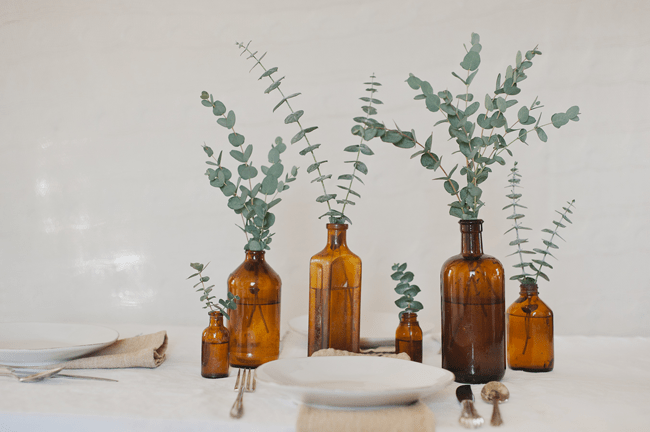
A multi-vase arrangement that sparks child-like imagination can be the center of attention in any room. You can use collected vases and stems to tell a story inspiring a wonder and mystery in any place setting for a dinner party, or on a holiday theme mantel.

To capture this atmosphere of imagination, I decided to use a collection of wine glass bottles that I painted gold, with a collected cut flower stems from the local grocery store. You could also use artificial cut flowers as well, that would last longer for that special season theme. The flower stems that I like to use are eucalyptus, roses, and sometimes anthuriums with cherry blossoms. The vase arrangements can be used from vintage glass bottles, up-cycled wine bottles, kombucha bottles to create a level of shape and sizes for your display. 

Below are a few examples of the flower stems and vases that you could recreate.

kombucha bottles
mason jars painted pink with artificial flowers

Attracting Cardinals to your yard

Northern Cardinals are probably the most desired of all backyard-visiting birds. With their vibrant plumage and beautiful songs, it’s no wonder people want to attract Cardinals to their yards.

Luckily for bird lovers, Cardinals are not particularly hard to please. With a few simple alterations to your backyard and bird feeder set up, your yard could soon become a haven for these beloved birds.

Northern Cardinals are non-migratory birds, meaning that once you draw them to your yard they are likely to stay there year-round. This also means, however, that if Cardinals aren’t native to your area, you won’t be able to do anything to attract them to your yard.

Cardinals can be found in the north as far as Maine and parts of southern Canada. In the south, they extend through Central America and the Gulf Coast. They are native to the west as far as South Dakota and Texas. In addition to their native regions, Cardinals have been introduced to Hawaii, southwestern California, and Bermuda.

Choose the Right Food

The first step to attracting any bird is to supply them with the food they enjoy. Northern Cardinals feature a strong, thick beak, which is perfect for large seeds and other hearty foods. Safflower seeds, black oil sunflower seeds, and white milo are among a Northern Cardinal’s favorite seed options. In addition to large seeds, Cardinals enjoy eating crushed peanuts, cracked corn, and berries. During the winter, small chunks of suet are another great choice. Be sure to check regularly that your feeders are filled, particularly during the early morning and late evening when Cardinals prefer to eat. Once Cardinals realize that your backyard offers a year-round, reliable food source, they will likely take up a permanent residence.

Use Proper Feeders

In conjunction with the type of food you offer, you need to select the proper types of feeders to suit your Cardinal friends. Your feeders need to be sturdy enough to support the birds. The weight of a Cardinal is approximately equal to 9 U.S. nickels (1.5 ounces), which is actually on the heavy side for a feeder bird. In fact, lightweight, hanging feeders are best avoided because they may sway under a Cardinal’s weight. Platform feeders and bird feeders with built-in trays that provide enough space to perch are usually preferred. Cardinals are broader, full-breasted birds, so they require more space when visiting a feeder.

Cardinals need easy access to water for both drinking and bathing. Providing bird baths or bird waterers is the perfect way to satisfy this need. As with the feeders, a birdbath needs to accommodate the size of these larger birds. Baths with a depth of 2 to 3 inches at the deepest point are usually best. To attract Cardinals to your birdbaths, you may consider adding drippers to keep the water moving. Keep in mind, whichever method you choose, water should be changed, and vessels should be cleaned frequently to prevent algae and dirt buildup.

Unlike many other backyard birds, Cardinals will not use birdhouses or nesting boxes. In addition to enjoying dense plant life for shelter, they also prefer it for nesting. Grapevines, tall trees, and shrub thickets are ideal options for nest sites. Readily available nesting materials are also essential to encouraging long-term Cardinal nesting. Make sure that your yard features pine needles, small twigs, grass clippings, and other materials so that Cardinal visitors will build a nest nearby.
Seed starting with egg cartons

Don’t throw away those egg crate cartons, because you can use them as a seed-starting tray this spring! Depending on the type of carton you have, you can even cut apart the individual sections and plant them, as the carton will biodegrade. Be sure to poke small holes for drainage, and put the cartons on a tray or in a shallow pan to catch any residual water.

Supplies that you need to start your little seedlings:

  • Cardboard egg carton
  • Potting soil
  • Coffee grounds
  • Seeds 
  • Waterproof tray to place under egg carton

Make a half-and-half mixture of equal portions of soil and grounds. A soup bowl full of this mixture should be plenty for this project. If you aren’t a coffee drinker, don’t worry! You can always stop by your local coffee shop and ask for used grounds. They’re usually happy to give them away for free.

plant your seeds in the egg carton without cutting it apart, and you can also cut it apart after your seeds have sprouted, but I’ve found that doing it in the beginning helps to prevent your roots from getting tangled later. It also keeps you from accidentally crushing or breaking sprouts while trying to separate the cups later.

Fill your individual egg cups about half full with the soil/grounds mixture.

Be sure not to add too many seeds to each egg cup. Overcrowded seedlings will often die off. For larger plants like squash, I plant only one or two seeds per cup. For smaller plants like cilantro and parsley, I plant about four or five seeds per cup. Remember that not every single seed will actually sprout, but that sprouted seeds will need room to grow and soil resources for nutrients. Cover seeds with a fine layer of the soil mixture.

Place the water proof tray under the egg carton ( to help catch water drainage) 

Pour water directly into the plastic plate rather than over the individual seed cups. The paper cups will soak up the water and keep your seeds moist. I maintain about a centimeter of water in the bottom of the plate at all times.

Be sure that your seed cups are in a place where they can get enough sun & watch your seeds sprout within 4-8 weeks!

Home is Where the Boat Is

Potting, Puttering & Pontooning

Cats and Trails and Garden Tales

Musings on cats, travel, gardens and life

Leaf And Twig

Where observation and imagination meet nature in poetry.

phillipsplace

A new beginning, mobile home living, adding our style inside and out.

Ruth E. Hendricks

Daily Journal of Life in Pittsburgh

The Haute Mommy Handbook

Motherhood Misadventures + Creative Living

Suzanne's Mom's Blog

Arts, Nature, Good Works, Luna & Stella Lockets & Birthstones

𝑻𝒐𝒓𝒏𝒂𝒅𝒐 𝑶𝒇 𝑪𝒉𝒂𝒐𝒔 🌪

Thoughts, experiences and learnings in a turbulent time

Sarah Rajkotwala - Author & Spiritual Teacher blog

Gardening Fairies Flowers Spirituality Angels Love Joy

Ideas and Advice for How To Live a Joyful and Empowered Life.

All Things Empowering - Healing Ourselves & Earth, Self-Sufficiency, Food Forests, Gardening, Art, Road Trips, Preserving, Foraging, Permaculture, Homesteading and More!

AmericaOnCoffee

We’re just inviting you to take a timeout into the rhythmic ambiance of our breakfast, brunch and/or coffee selections. We are happy whenever you stop by.

Heart to Hearth Cookery

Sharing my Experimental Archaeology of Food

The Herb Society of America Blog

Learn • Explore • Grow