Best air plants for beginners

While most air plants are generally easy to maintain and care for, some still require more care than others. Below are 5 of the best air plants for easy care.

Best air plants for beginners with minimal care

  1. Tillandsia harrisii
  2. Tillandsia caput-medusae
  3. Tillandsia ionantha
  4. Tillandsia fuchsii
  5. Tillandsia tectorum

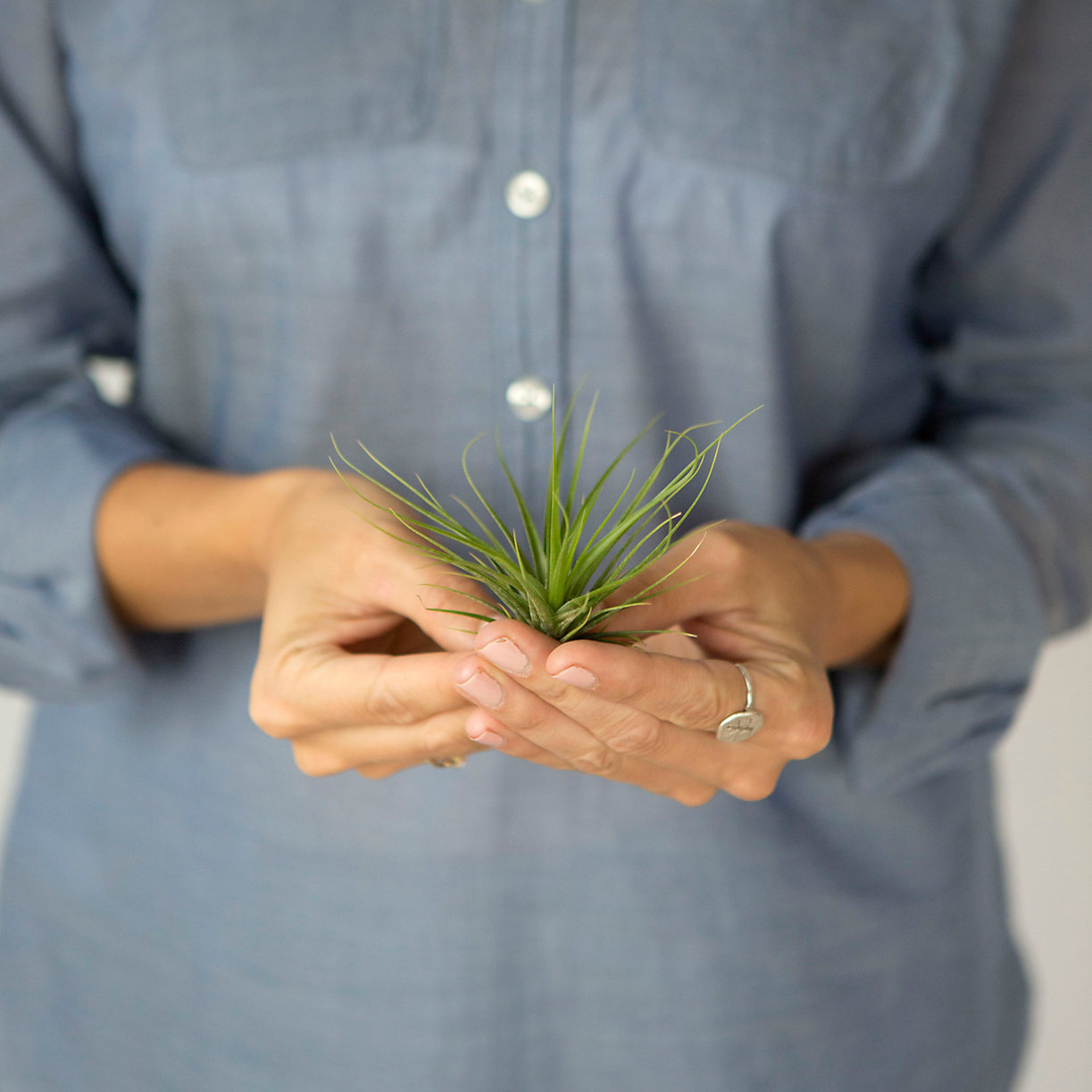
Tillandsia harrisii is a rosette shaped air plant that has soft and fuzzy silvery leaves. It doesn’t need very frequent watering, and will be fine if you forget to water it once or twice. That is great news for beginners and busy people. If you notice it’s not as fuzzy and seems dry, it means that your plant needs watering. What is more, t. harrisii loves bright light, so you can position it near a windowsill or window where it could get some bright unfiltered light in the morning and afternoon, and indirect light for the rest of the day. In winter or even in an office, use fluorescent lights . 

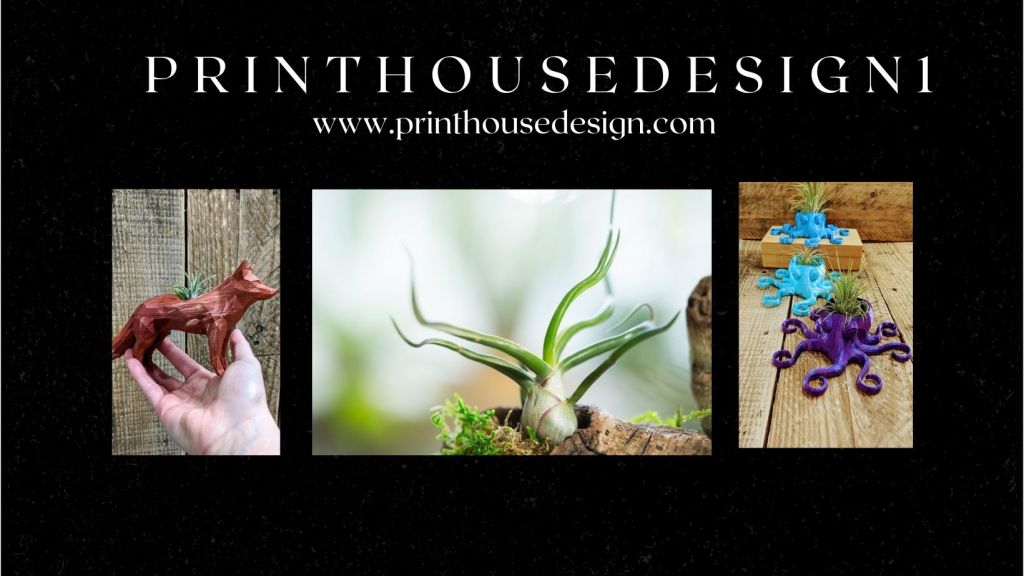
Tillandsia caput-medusae is a bulbous air plant that has green curly leaves. It is very popular for its interesting snake-shaped leaves (it’s also called an octopus plant). With a good amount of light, this air plant develops some purple coloration on leaves.You can dunk the plant in water for 10 minutes in summer, once a week. Always make sure to shake off any excess water to prevent rotting of the plant. ( Our Etsy shop offers this plant for sale to add along with one of our planters) www.printhousedesign.com

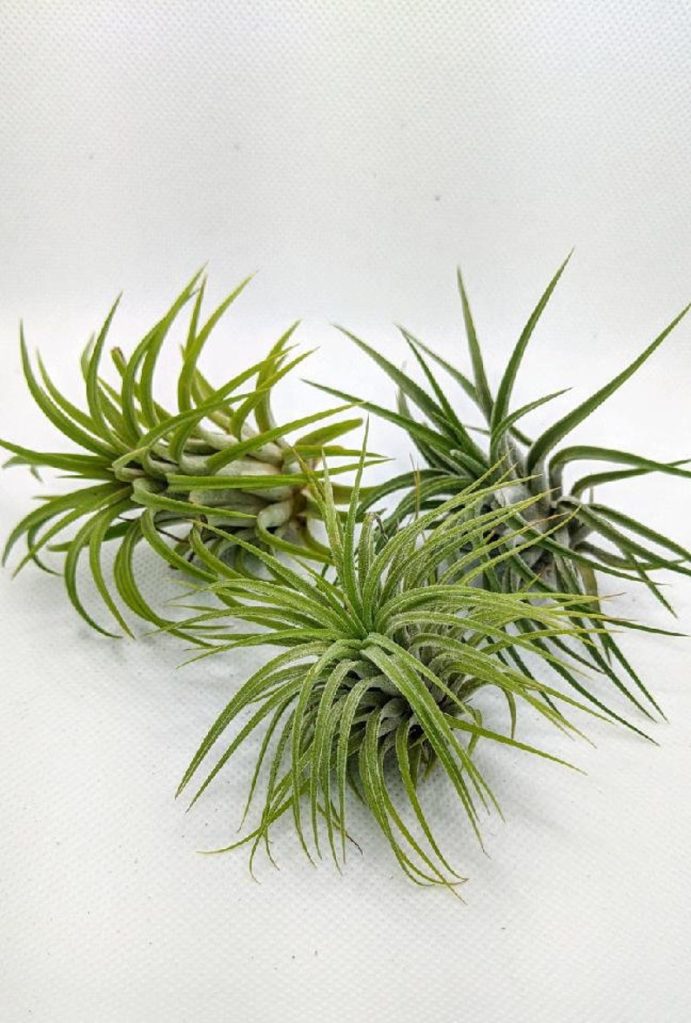
Tillandsia ionantha is one of the most common air plants that are great for beginners and people with busy lifestyles. They are also popular due to their beautiful and vivid coloration and small to medium size. Tillandsia ionantha love lots of bright but filtered/indirect light. You can place it near a window, and make sure to provide very good ventilation.

These plants also love good misting, but not deep watering sessions. You can dunk the plant in water for 10 minutes and shake off excess once a week in summer. Or, you can solely stick to misting it 2-4 times a week. During colder periods of the year, only mist the plant, once-twice a week. Our Etsy shop offers these type as well www.printhousedesign.com

Tillandsia fuchsii is a tuft-like thin and grassy air plant that is cute and is rather easy to care for. It is also common and you can easily find it for sale. It’s medium in size and has beautiful dense silvery leaves. Tillandsia fuchsii loves bright but indirect light, so you can place it somewhere bright without direct sun. You will need to soak it 1-2 times a week in summer, and once a week during colder months of the year.

Tillandsia tectorum is a cute white fuzzy air plant that is very drought tolerant. Its leaves have a lot of trichomes for water absorption, thus its very fuzzy appearance.

Because tillandsia tectorum is a slow grower and drought-tolerant, it’s easy to care for. It doesn’t require deep watering, and misting the plant 3-5 times/week in summer and 2-3 times/week in spring, fall and winter is sufficient.

While most air plants are generally easy to maintain and care for, some still require more care than others. In this post, the 5 best air plants for beginners and busy people should help you off to a plant mom or dad start!

Cabbage & Kale

During trips to your local garden shops you’ll begin seeing cool- and cold-weather annuals like ornamental kale, which is a popular option for color during the colder months. But what exactly is it and how do you care for it?

Both ornamental kale and cabbage fall under the Brassica oleracea botanical name. They look very similar to the kales and cabbages that grace our salad bars, but were cultivated for vanity instead of taste buds. You’ll also find them being called flowering kale and cabbage. The coloring of these plants usually falls within purple, pink and green palettes, but there are a few varieties that are yellow and white in the centers. 

These plants love cool weather and actually do best when temperatures fall below 60 degrees Fahrenheit as a high. The cooler the temperature, the more vibrant the “flowers,” or leaves become. Ornamental kale will keep gorgeous color until the temperatures dip below 20 degrees Fahrenheit on a regular basis. 

Planting :

Ornamental kale is a great landscape plant as well as a container plant. Whether you’re using it in a garden bed or in container gardening, it’s a great complement to other fall plants like chrysanthemums, ornamental peppers, and violas. One of my favorite ways to utilize ornamental kale in designs is to plant it in clusters of threes.  Another great way to use it in your garden is to plant it in your window boxes as a focal point alongside smaller seasonal plants like pansies and sedums. These plants typically do not grow quickly so they can be planted with tighter spacing. 

Care tips:

Ornamental kale is one of the easiest cool-weather plants to care for. When you plant it, make sure the root ball is loosened and that you sink the plant into the soil until the bottoms of the leaves are flush with the ground or the container lip. Make sure you water the plant thoroughly afterwards.  

For maintenance, let it dry out before watering again but do not prolong the drought period. They can maintain their beauty in full sun or part sun. They do not like hot weather, so be sure to plant them only when the temperatures are consistently cool, as stated above. 

Vase Life tricks:

Harvest kale when the leaves are large and firm, remove the foliage from the lower third stem. Pick cabbage anytime after they take the shape of a rose blossom and remove any lower leaves. Both cabbage and kale last extremely well in vases up to 2 weeks, but they can make the water smell skunky after a few days. Using floral preservatives helps with the smell & I recommend changing the water every 3rd-4th day.

Eucalyptus Plant Care Tips

Eucalyptus is a genus of ornamental plants with attractive aromatic leaves. Although eucalyptus trees are enormous, many eucalyptus plants can grow in pots and make stunning indoor houseplants. Depending on your zone, you can also plant eucalyptus shrubs and trees in a sunny location outdoors. There are about 700 species of eucalyptus, many of which are also called gum trees. The distinctive citrusy aroma that the crushed eucalyptus leaves give off generally identifies eucalyptus plants. The leaf shape and bark type of eucalyptus plants vary from species to species.

Eucalyptus plants grow well indoors if they get plenty of sunlight. Potted eucalyptus plants are ideal for growing in containers as perennials or annuals. But it’s good to remember that eucalyptus plants are fast-growing trees, and some species can grow at a rate of up to 8 ft. (2 m) in one season. Possibly after a year or two, the indoor eucalyptus tree will outgrow the room. You can then either remove the leafy branches to dry the leaves. Or you can grow a new indoor eucalyptus plant from a cutting or seedling.

If you live in USDA zones 8 through 11, you can grow eucalyptus shrubs and trees in the ground or pots outdoors. The ideal temperature range for growing eucalyptus is 65°F to 71°F (18°C – 22°C). All you need to grow outdoor eucalyptus plants is to choose a sunny location. If you live in colder climates, you can easily grow potted eucalyptus plants indoors. Take the pots outdoors in the summer. Then bring them back inside in the fall to protect the plant from the cold.

Eucalyptus plants growing indoors need plenty of light. Eucalyptus plants growing indoors require at least six hours of sunshine daily. Place a potted eucalyptus in the brightest, sunniest location in your home. A south- or west-facing window is ideal as the plant will receive the midday and evening sun.

Water an indoor eucalyptus plant regularly during the growing season. The best way to water your plant is to wait until the top third of the potting mix is dry. Thoroughly drench the soil until water drains from the bottom. Only water eucalyptus plants as often as the top layer of soil dries.

Eucalyptus plants grow best indoors when grown in a rich, fertile, loose potting soil with excellent drainage. Make a soil mix for eucalyptus by mixing one part soil ( miracle grow), one part peat moss, and one part perlite or coarse horticultural sand. This type of eucalyptus soil doesn’t retain too much moisture and has plenty of nutrients. Peat moss is loose and airy and contains essential nutrients for healthy plant growth. Perlite is an excellent soil amendment to improve drainage and allow plenty of oxygen in the soil.

To keep eucalyptus plants thriving indoors, keeping the indoor temperature warm—around 68°F to 71°F (20° – 22°C) is ideal. Eucalyptus plants have average humidity needs, so there’s no need to mist the leaves.

Follow our blog on Friday about harvesting and drying eucalyptus leaves/stems.

Drying Lavender

Harvest the pretty purple flowers to make dried lavender bunches or dried lavender buds for potpourri or sachets. Drying lavender isn’t difficult. Learn how to dry lavender, my favorite herb to grow and use. 

Drying lavender starts with harvest, and that process varies depending on what you’ll do with your dried lavender. If you plan to make dried lavender bunches, clip lavender flowering stems when blooms are open at the base of the spike or roughly three-quarters of the flowers are open on each stem.  

Cut lavender flowers in the morning after dew has dried. Avoid cutting stems on a rainy day. Flowers dry best—with less chance of mold or mildew—when they’re dry to start. Cut stems on the long side, especially if you’re planning to make a lavender wreath. You can always trims stems after they dry.  

For drying lavender, bundle stems together so that flower heads are lined up. Use two rubber bands per dried lavender bunch—one just beneath the flower heads and one at the base of stems. Hang bundles upside down to dry in a dark, warm spot. Protect drying lavender from sunlight to retain best color, and place a sheet beneath the bundles to catch any buds or blooms that might fall. You should have dried lavender bunches in about seven to 10 days, depending on humidity.  

You can also dry lavender by arranging loose stems in a basket or on a screen. Keep them in a single layer, if possible. In dry climates, gardeners sometimes place loose lavender stems on a sheet or tablecloth on a deck or driveway, covering blooms with another sheet to keep out debris. This method typically takes a week to 10 days to yield dried lavender, depending on relative humidity.  

Soon our Etsy shop will offer dried lavender buds for you to use as a sachets in your dresser drawers to bring a little fragrance to your clothes, or to add to your relaxing bath waters. 

http://www.printhousedesign.com

Tillandsia Red Abdita

The Tillandsia Red Abdita is native to Mexico and Central America and is one of the few varieties that enjoy both direct and indirect sunlight. The characteristic curly leaves of the Xerographica grow from the center of the plant out and spiral into themselves.

Red Abdita are easy to care for; just give them a soak in water each week for about 9-15 minutes and they will continuously bring the benefits of clean air and beauty to your space. The air plants can be a stunning statement piece in any bright space, they need no soil to grow, so they truly can be put anywhere. They can be hung from walls or set on tables- the possibilities are endless with this easy to care for air plant. 

Our Etsy shop offers this beautiful air plant along with a cute 80’s troll as a planter! 

Follow the link to see it at the shop:

https://www.etsy.com/listing/892525877/air-plant-troll-planter-for-indoor

Our Tillandsias’ are placed indoors in a north-facing window area where we can control the temperature to keep the growing space around 60-70 degrees F. We do not suggest growing air plants outdoors when we are experiencing freezing temperatures, however, they can be grown outdoors in the spring and summer! Give this unique air plant a try and experience the beauty and ease this plant will bring to your life.

Home is Where the Boat Is

Potting, Puttering & Pontooning

Cats and Trails and Garden Tales

Musings on cats, travel, gardens and life

Leaf And Twig

Where observation and imagination meet nature in poetry.

phillipsplace

A new beginning, mobile home living, adding our style inside and out.

Ruth E. Hendricks

Daily Journal of Life in Pittsburgh

The Haute Mommy Handbook

Motherhood Misadventures + Creative Living

Suzanne's Mom's Blog

Arts, Nature, Good Works, Luna & Stella Lockets & Birthstones

𝑻𝒐𝒓𝒏𝒂𝒅𝒐 𝑶𝒇 𝑪𝒉𝒂𝒐𝒔 🌪

Thoughts, experiences and learnings in a turbulent time

Sarah Rajkotwala - Author & Spiritual Teacher blog

Gardening Fairies Flowers Spirituality Angels Love Joy

Ideas and Advice for How To Live a Joyful and Empowered Life.

All Things Empowering - Healing Ourselves & Earth, Self-Sufficiency, Food Forests, Gardening, Art, Road Trips, Preserving, Foraging, Permaculture, Homesteading and More!

AmericaOnCoffee

We’re just inviting you to take a timeout into the rhythmic ambiance of our breakfast, brunch and/or coffee selections. We are happy whenever you stop by.

Heart to Hearth Cookery

Sharing my Experimental Archaeology of Food

The Herb Society of America Blog

Learn • Explore • Grow